
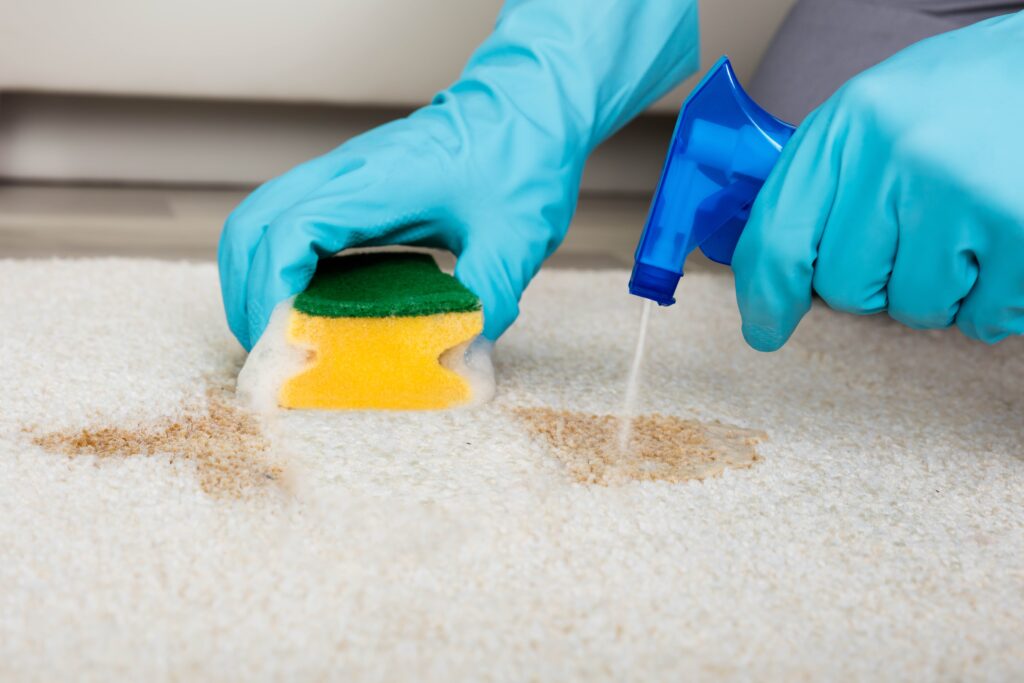


Use less water than you think you need
Follow your carpet cleaner’s directions for filling the machine and making passes. More water does not necessarily remove more soil. Over-wetting can leave the carpet and padding damp for longer, creating conditions for mildew and increasing the risk of damage. If a machine leaves a wet area behind, stop adding water and focus on removing moisture before you continue.
Drying depends on how much water reached the backing, airflow and humidity. Open a window when outdoor conditions help, run fans across the area and use a dehumidifier if you have one. Keep foot traffic off the carpet while it dries. If moisture has reached the padding or the area remains wet, professional help is a safer choice than another cleaning pass.
Choose products made for your carpet
Dish soap, bleach products such as Clorox, and disinfectants such as Lysol are not substitutes for a carpet cleaning solution. Even a familiar spot remover such as Resolve may be unsuitable for a particular carpet or stain. The wrong product can discolor fibers, leave residue or make a stain harder to treat.
Check the carpet care instructions and the product label before applying a cleaner. Test a small, hidden area, use only the directed amount and let the test spot dry before checking for color or texture changes. We offer a Spot Pro Spotter Bottle for between cleanings for $15; follow its use instructions and your carpet’s care guidance rather than applying more product to a stubborn spot.
Vacuum before wet cleaning
Much of the soil in a carpet is dry. Vacuuming first lifts loose dirt, dust and debris before a wet cleaner can move them through the fibers. Give visible debris and higher-traffic areas particular attention, then follow your machine’s operating instructions. Vacuuming is preparation, not a reason to add extra water or cleaning solution afterward.
Blot spills instead of scrubbing
For a fresh spill, lift any loose material without grinding it into the pile. Press a clean, absorbent cloth or paper towel onto the wet area, then move to a clean section of the cloth as it picks up liquid. Work from the outside edge toward the center. Rubbing back and forth can spread the stain or disturb the fibers.
Stop DIY treatment if the stain continues to spread, the carpet changes color or you do not know how the fiber will react. Adding one cleaner after another can complicate later treatment. A stubborn stain is a good reason to consider professional carpet cleaning rather than repeating an unsuccessful attempt.
Match the approach to the carpet and conditions
Before deciding between spot treatment and a larger cleaning job, consider the size of the affected area, the type of spill, the carpet care instructions and whether you can dry the area promptly. Humid conditions can slow drying, so use extra caution with water when airflow is limited. For a small, fresh spill, careful blotting may be enough to start. A widespread or persistent problem calls for a different approach.
The cost of a DIY attempt can change with the area you treat and the products or equipment you use. Repeated treatments also use more supplies and can increase the risk of damage without improving the result. Our Spot Pro Spotter Bottle is $15. If you would rather have help with a stubborn stain or your next cleaning, call UpFront Home Services at (832) 303-3546.