
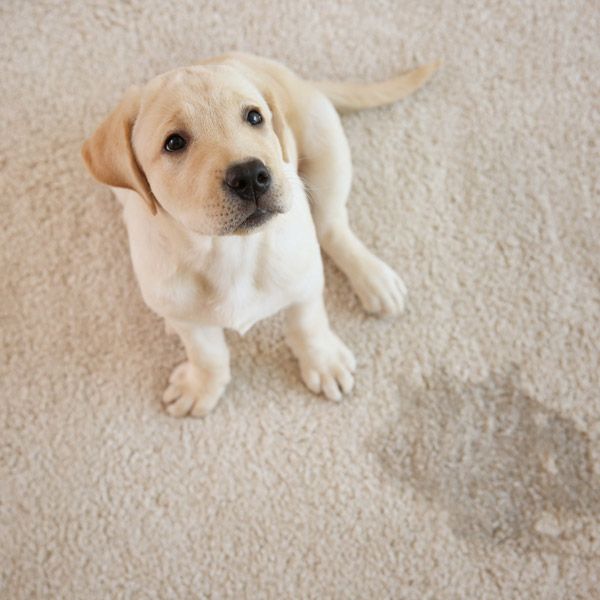


How enzyme treatment for carpet works
An enzyme cleaner uses enzymes to break down components of a pet urine deposit. It needs contact with the affected material and enough dwell time to do that work. Spraying an enzyme product onto carpet and immediately cleaning it away gives it less time than leaving it in place overnight.
The enzyme approach we contrast with our treatment involves applying it the day before a carpet cleaning appointment, then returning the next day to extract it. Dwell time alone does not settle the result: urine may have moved through the fibers into the carpet backing or padding, where a surface application may not reach it.
How we treat pet urine
We use a hydrogen peroxide (H2O2) blend rather than relying on an enzyme application or a basic deodorizer. Our treatment targets the ammonia smell by converting ammonia to ammonium and treats bacteria associated with the urine. It also addresses yellow urine staining. These are different jobs: reducing an odor does not necessarily remove a visible mark, and improving the carpet surface does not establish what remains beneath it.
The affected material matters. Urine on carpet fibers presents a different treatment decision from urine that has soaked into backing, padding, or subfloor material. Peroxide-based products can also affect some dyes and materials, so a carpet’s color and construction matter when considering treatment. Do not combine household urine cleaners or apply an unfamiliar product to a large area without checking its directions and material compatibility.
What affects results and cost
- How far urine has traveled: A spot confined to the fibers differs from contamination that has reached the padding or subfloor. A returning odor can indicate that material below the cleaned surface still needs attention.
- The size and number of affected areas: Several spots or a larger area can require more work than one small mark.
- Carpet material and prior products: Dye sensitivity and residues from earlier cleaners can affect the treatment choice and the appearance of a stain.
- Moisture: In humid conditions, carpet and padding may stay damp longer. If odor becomes noticeable again as an area dries or is re-wetted, consider whether urine remains below the fibers.
Those conditions can change the work involved and, in turn, the cost. A visible yellow spot is useful to identify, but it may not show the full extent of urine beneath the carpet. For help deciding what to do with an affected area, call us at (832) 303-3546.
Similar names describe different treatments
Enzyme treatment for skin, facials, and hair refers to cosmetic uses, not pet urine carpet cleaning. Enzyme treatment for drains concerns plumbing. Enzyme replacement therapy refers to medical care and is separate from our service. For pet urine, we focus on cleaning methods that reach the affected carpet materials.