


Where cleaning may help with dust
Dust on a vent cover is easy to see. The more useful clue is what happens when your heating or cooling system runs: do you see particles coming from supply vents, or is there substantial debris inside accessible ducts? Cleaning can remove material collected in ducts and vents, but it will not stop dust brought indoors on shoes, produced by daily activities or entering through gaps around the home.
In Katy, where dusty outdoor conditions and frequent AC use can make indoor dust noticeable, it helps to identify the source before choosing a service. Persistent dust, a stale odor or uneven room temperatures can justify a closer look, but none of those signs alone proves the ducts are the cause.
Conditions that make a closer look worthwhile
Debris released from supply vents: Visible particles entering a room when the system runs are a stronger reason to examine the ductwork than an ordinary layer of settled dust.
Heavy buildup or an obstruction: Accumulated material inside accessible ducts may call for removal. Weak airflow can also have causes elsewhere in the HVAC system.
Suspected moisture or pests: A musty odor, damp material or signs of vermin call for attention to the underlying cause. Cleaning alone will not keep a problem from returning.
The U.S. Environmental Protection Agency’s duct-cleaning guidance recommends considering cleaning for substantial visible mold growth in hard-surface ducts or other HVAC components, vermin infestation, or excessive debris that is released into the home. It does not recommend routine cleaning on a fixed schedule.
How we clean ducts and vents
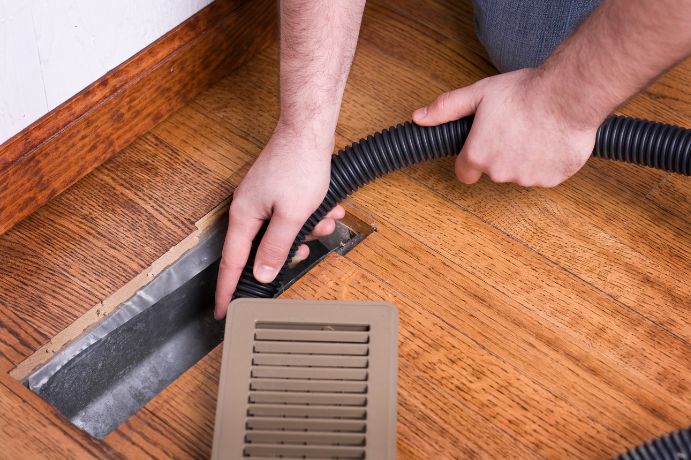
We begin by assessing the dust and debris in the ducts and identifying areas that need attention. The cleaning described by UpFront Home Services uses a tool to dislodge buildup from duct walls and a high-powered vacuum to extract it. Air sweeping moves remaining particles through the system, and vent cleaning removes buildup at the openings.
Our described process also includes sanitizing and deodorizing. Those treatments address a different question from physical debris removal. A fragrance cannot correct a moisture source, and a sanitizer should not stand in for removing dirt. If a chemical treatment is being considered, the product, intended use and duct material matter.
What affects the cost of duct cleaning
Square footage alone does not determine an air duct cleaning cost. A 2,000-square-foot house, for example, may have a different number of vents, amount of ductwork or level of buildup from another house of the same size. System accessibility, the areas included in the work and whether a treatment is included also affect the scope of a quote.
Compare quotes by what they cover: duct interiors, vent cleaning, debris removal and any proposed sanitizer or deodorizer. A low initial figure is less useful if it leaves out the areas that prompted you to seek cleaning.
Airflow and energy use need a closer look
A blocked duct can restrict air to a room, so a buildup assessment makes sense when a vent has noticeably weak airflow. Uneven temperatures and a high electricity bill can also result from issues outside the ducts. Removing dust from ducts alone is not a reliable way to predict lower bills, fewer repairs or a longer HVAC lifespan.
Compare airflow at several vents and note whether the problem is limited to one room or affects the whole home. That distinction helps separate a possible local obstruction from a broader heating or cooling problem.
Ways to reduce dust between cleanings
Check your HVAC filter and replace it according to the filter and system guidance. A poorly fitted or overloaded filter can let more particles circulate.
Vacuum and damp-dust surfaces so settled particles are removed rather than stirred into the air.
Keep dirt from entering at doors, and address leaks or moisture near ducts and HVAC components. Wet material needs its cause corrected, not just a surface cleaning.
Choosing duct cleaning in Katy
If you are looking for air duct cleaning near you, start with the condition you want addressed rather than a promise of a dust-free home. Compare the assessment, which ducts and vents will be cleaned, how debris will be extracted and whether any chemical treatment is proposed. UpFront Home Services is based in Katy, Texas. You can contact us through our home page to discuss the dust, odor or airflow concern you have noticed.
How Homeowners Benefit From Air Duct Cleaning
While you might be diligent about dusting and vacuuming, dust seems to reappear almost immediately. But it doesn’t matter how clean you keep your place if you neglect the air ducts. They can suck up even the tiniest dust particles. Then, they distribute them to every room with an air vent when you turn on the HVAC. Cleaning your air ducts improves your quality of life by addressing this issue at the source.
How It Benefits Your Health
Dust and other particles can irritate your lungs and nose, triggering anything from mild discomfort to more serious asthma attacks. Clean air ducts circulate nothing but clean air, mitigating respiratory issues and allergies.
When clean air circulates in your home, you breathe easier, and your overall health can improve. This is important for people with conditions like asthma or allergies, as it reduces the triggers that can cause flare-ups. Moreover, reducing the amount of dust and allergens in the air can also improve sleep quality, making you more rested and energetic throughout the day.
How It Improves Energy Efficiency
When your air ducts are clean, the air flows more freely through your HVAC system, meaning it doesn’t have to struggle when it runs. When the ducts are free from dust and debris, the HVAC system uses less energy, which can result in potential savings on your energy bills. On average, the average Texas household pays around $2,040 per year on their electricity bill. An efficient HVAC system can reduce this monthly energy cost.
How It Extends HVAC System Life
Collected dust and other particles can cause blockages and force the HVAC system to work harder than necessary, leading to breakdowns and the need for repairs. Clean ducts lower the likelihood of system malfunctions, extending your HVAC system’s years of service.
It can also improve the way your HVAC system performs, making it more reliable and less prone to unexpected failures. It means you can enjoy consistent comfort without worrying about sudden breakdowns or high repair costs.
Signs that Your Air Ducts Need Cleaning
No one likes staying in a dusty room, but sometimes it doesn’t matter how often and how thoroughly you clean. The dust keeps coming back, and the culprit is right under your nose. Or right above your head to be exact. Your air ducts will show you when they are due for a good cleaning; just be on the lookout for these signs.
More Pronounced Allergy or Asthma Symptoms
If you’re experiencing more pronounced asthma symptoms or are coughing more often, it may be time to consider cleaning your air ducts. Dust and other allergens can accumulate in the ducts and spread throughout your home when the HVAC system is running. This increases symptoms such as itchy noses, sniffling, and irritated, red eyes.
Even if you don’t usually suffer from allergies or asthma, a buildup of dust in the air ducts can cause discomfort and health issues. Cleaning out your air ducts can help lessen these symptoms and improve the air quality in your home.
Dust and Debris
If you find excessive dust on surfaces around the home despite regular cleaning, your air ducts might need attention. Dust gathered in the air ducts can spread throughout your home and settle on every surface, resulting in a constant layer of dust on furniture, floors, and other surfaces, no matter how often you clean.
If you notice dust buildup around vent covers, it strongly indicates that the ducts are dirty. Clean air ducts regulate how much dust circulates in your home and contribute to producing cleaner air from your HVAC system.
Unexplained Odors
If you notice a persistent stale smell or the air in your home is almost too heavy to breathe, your air ducts might be the reason. Excess dust and debris can make the air less fresh, leading to unpleasant odors circulating through your home.
Pay close attention to whether the odor is strongest near the air vents. When dust, mold, or other contaminants build up in the ducts, they can produce musty or stale smells that permeate the entire house. Addressing these odors by cleaning the air ducts can make your home smell fresher and feel more inviting.
Inconsistent Airflow
If the heating or cooling in different rooms of your house is uneven, that can indicate that the air ducts need cleaning. When airflow from vents is weak, it might be due to blockages or debris within the ducts.
Inconsistent airflow can make some rooms uncomfortably hot or cold, putting extra strain on your HVAC system because it operates overtime to achieve the set temperature. Cleaning the air ducts can help maintain consistent airflow and even temperatures throughout your home, making you more comfortable.