


Call or text (832) 303-3546

Five Practical Habits for Cleaner Carpets

By UpFront Home Services · Published September 15, 2023 · Updated November 17, 2026

Five Practical Habits for Cleaner Carpets
4.9Google rating from 4,144 reviews
Better Business Bureau A+ ratingGoogle 4.9 rating4.5 RATING

Vacuum according to foot traffic

Start with the paths you use most: entrances, hallways and the space around seating. Vacuum high-traffic carpet at least twice a week, and more often when you see tracked-in debris. Lower-traffic rooms may need less frequent attention. Work slowly enough for the vacuum to pick up loose dirt rather than making one quick pass over each area. A quality vacuum with HEPA filtration can help capture fine particles.

Move lightweight items so you can reach the carpet beneath them, and give edges and furniture legs attention when you vacuum. If a patch still looks dull after loose dirt is removed, repeated dry passes may not address soil held deeper in the fibers.

Blot spills before they spread

When a spill happens, press a clean white cloth or paper towel onto it. Work from the outside toward the center, changing to a clean part of the cloth as it absorbs the spill. Rubbing can spread the mark and disturb the fibers. Pick up any solids first rather than pressing them into the carpet.

Treatment depends on both the spill and the carpet. A drink stain, an oily mark and tracked-in mud may respond differently, so check your carpet’s care instructions and test any homemade or commercial product in an inconspicuous spot. Use only as much moisture as the instructions allow. If a mark persists, avoid layering several cleaners over it; that can make the result harder to judge.

Protect carpet beneath furniture

Heavy furniture concentrates weight in small areas and can leave dents. Periodically reposition furniture where practical so the same fibers do not bear that weight indefinitely. Furniture coasters or felt pads under legs can also help distribute pressure. Check the carpet when you move a chair or table: the newly exposed area can show how much soil the surrounding traffic has brought in.

Keep outdoor dirt at the door

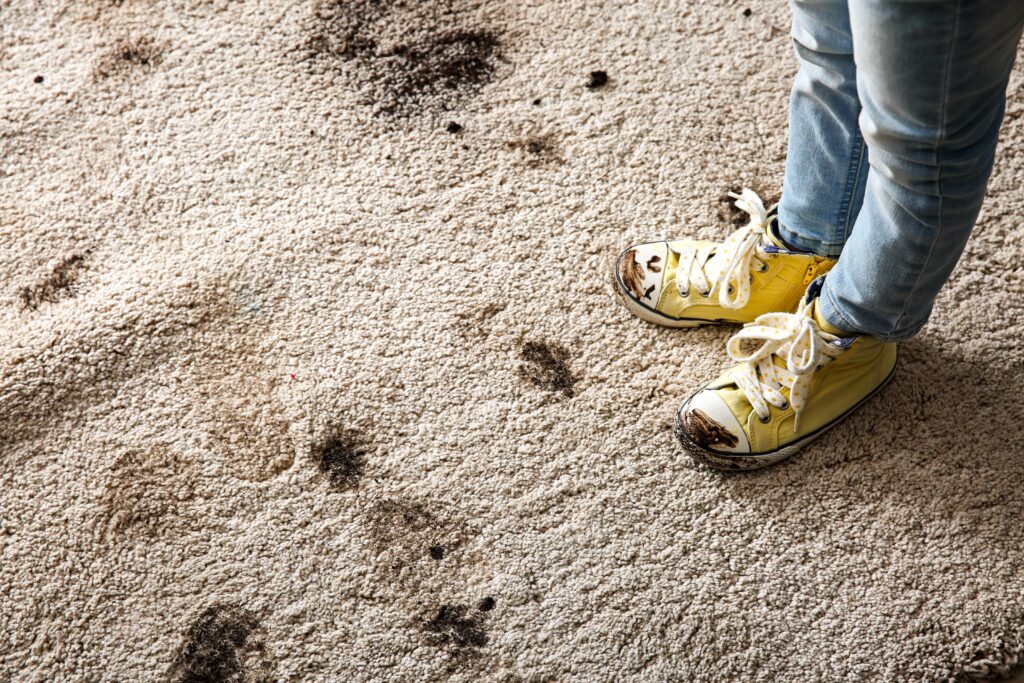
A shoe-free routine reduces the dirt carried across carpet from outside. Set aside a place near the entrance for shoes so the habit is easy for family members and guests to follow. Vacuum the entrance path more often than a little-used bedroom; it receives the first share of grit and debris tracked into the home.

Plan professional cleaning around your carpet’s condition

We recommend professional carpet cleaning at least once a year alongside regular vacuuming and prompt spot care. Homes with heavier foot traffic, children or pets may need attention sooner. Professional cleaning can address embedded soil that ordinary vacuuming leaves behind, but the appearance afterward depends on the carpet’s condition and the type and age of any stains.

When you compare cleaning services, look at reviews and recommendations, and compare what each estimate covers rather than its total alone. Carpet area, soil level, stain type, fiber and furniture access are useful details to include when describing the job because they affect the work involved and may affect a quote. Check the carpet maker’s care guidance when considering any cleaning method or solution. We can help you plan professional cleaning as part of a practical routine for your home.

Five Practical Habits for Cleaner Carpets questions, answered

Do not see yours? We pick up the phone.

(832) 303-3546

“5-5-5” is used for different short cleaning routines, rather than one established carpet-care rule. A timed tidy-up may help you put items away and make room to vacuum, but it does not tell you how to treat a stain or how thoroughly to clean carpet. Follow the carpet’s care instructions and give heavily used areas the attention they need instead of relying on a timer.

Keep loose grit from building up, deal with spills promptly and use a clean white cloth to blot rather than scrub. For a more thorough vacuum, slow down over busy walkways, overlap your passes and reach the edges when you can. Those habits help between deeper cleanings. They also make it easier to see which spots are actual stains rather than removable surface dirt.

People often use baking soda in an attempt to reduce odors before vacuuming. It does not remove the cause of a spill or replace cleaning embedded dirt, and fine powder can be difficult to remove completely. Before putting it on carpet, check the carpet and vacuum manufacturers’ guidance. If an odor remains after ordinary cleaning, finding its source is more useful than repeatedly adding powder.

There is no single homemade mixture that suits every carpet and stain. A solution sold at Tesco or another retailer is not automatically suitable either. Check the product label against your carpet’s care instructions, then test it in an inconspicuous area before treating a visible mark. For a fresh spill, begin by absorbing what you can; adding cleaner before blotting may spread the liquid further.

For a small spot, remove solids, blot up liquid and use a carpet-compatible treatment only if the care instructions allow it. Let the area dry before judging the result. For a generally dirty carpet, vacuum thoroughly first; hand-treating scattered marks is different from washing an entire room. If you use a carpet-washing machine, do not keep adding water solely to make recovered water run clear. Excess moisture can leave carpet slow to dry.

Professional or “satisfying” carpet-cleaning videos can show visible soil being lifted, but a short clip cannot establish how an entire carpet will look after drying. Lighting, carpet fiber, stain history and editing all affect what you see. Use videos to learn which methods a provider demonstrates, then compare the proposed cleaning approach with your carpet’s care instructions and the condition of your own rooms.

Our general recommendation is at least once a year, with household traffic and visible soil helping you decide whether to clean sooner. When choosing a provider, read reviews, seek personal recommendations and compare estimates on the same scope of work. Consider the carpet areas involved, stains you want addressed and any care requirements for the fiber. Be cautious of promises that every old stain will disappear.

For high-traffic areas, it’s recommended to vacuum at least twice a week or even more frequently depending on the level of foot traffic. Regular vacuuming helps remove dirt and debris before they become deeply embedded in the carpet fibers.

While many homemade stain removers can be effective, their efficiency largely depends on the ingredients used and the type of stain being treated. It’s always important to test any solution, whether homemade or commercial, in an inconspicuous area of the carpet first to ensure it doesn’t cause any damage.

When searching for a professional carpet cleaning service, it’s wise to read online reviews, ask for recommendations from friends or family, and ensure the company uses eco-friendly and carpet-safe cleaning solutions. You should also inquire about their certifications to ensure they follow industry standards.

Yes, establishing a shoe-free zone can significantly impact the cleanliness and lifespan of your carpets. Shoes can track in a myriad of pollutants from outside, including dirt, bacteria, and even pesticides. By minimizing this, you reduce the wear and tear on your carpet and prevent potential health hazards.