
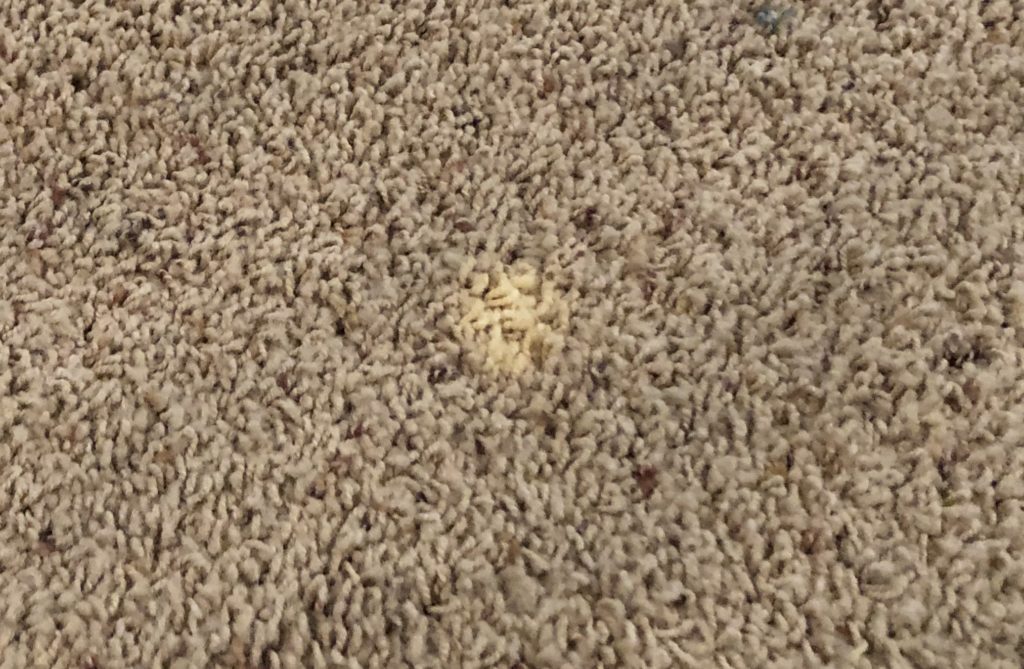


What bleach does to carpet and what to do first
A pale bleach spot is usually color loss, not a stain sitting on top of the carpet. Removing leftover liquid will not put the original color back. If the spill is fresh, keep people and pets away from the area, blot up the liquid without rubbing, then use a small amount of plain water and blot again. Avoid soaking the carpet backing or spreading the liquid into surrounding fibers.
The fastest useful step is to limit further contact, not to scrub the spot. Do not combine bleach with vinegar, ammonia or other cleaning products. If the area has a strong chemical odor, ventilate it and follow the bleach product’s safety directions before handling the carpet.
How we choose between dyeing and patching
The carpet fiber determines the repair route we offer. A bleach spot on wool or nylon carpet can be dyed to match the surrounding carpet. For polyester and other carpet fibers, we repair the spot with a patch instead. Dyeing addresses missing color; patching replaces the affected piece of carpet. The spot’s size, the surrounding color and the condition of the fibers all matter when considering how a repair will look.
If you know the carpet’s fiber, keep the manufacturer label, purchase information or packaging from a leftover piece handy. If you do not, those records may help identify it. A visual guess is less useful because carpets that look alike can be made from different fibers. Avoid testing an unknown carpet with household dyes or chemicals before choosing a repair.
How we repair a bleach spot with a patch
For a patch repair, we cut out the bleach-damaged spot and fit a piece of extra carpet in its place. We put seam tape beneath the repair, position the new piece and use a seam iron to complete the seam. Extra carpet is necessary for this repair, so a leftover piece from the original installation is useful.
A close match involves more than color. Pile direction, texture and wear can make a replacement piece more or less noticeable beside the existing carpet. If you do not have leftover carpet, locating a suitable piece is the first practical hurdle before a patch can be planned.
What affects the repair and estimate
- Fiber: Wool and nylon may be dyed; other fibers call for patching in our repair approach.
- Spot size and number: A larger damaged area or several separate spots changes the amount of carpet and repair work involved.
- Matching material: A patch requires extra carpet, and its color, texture and pile should be compared with the area around the spot.
- Existing wear: A new-looking remnant beside a worn traffic area may stand out even when both pieces came from the same carpet.
We provide professional carpet repair and stretching services in Houston and surrounding cities. For a free estimate and to check availability, call or text us at (832) 303-3546. You can also visit UpFront Home Services.
What to do after bleach has dried or left an odor
A dried, light-colored spot still needs a color repair or patch if bleach removed the dye. Repeated washing will not recreate the missing color. If you are dealing with a lingering bleach smell, ventilating the area and allowing it to dry addresses a different concern from the visible spot. Avoid adding another chemical to cover the odor, particularly while bleach residue may remain.
Online suggestions, including vinegar, baking soda and color-matching crayons, do not determine whether your carpet can be dyed or provide matching carpet for a patch. Vinegar must not be mixed with bleach. Baking soda will not restore color that bleach has removed.