
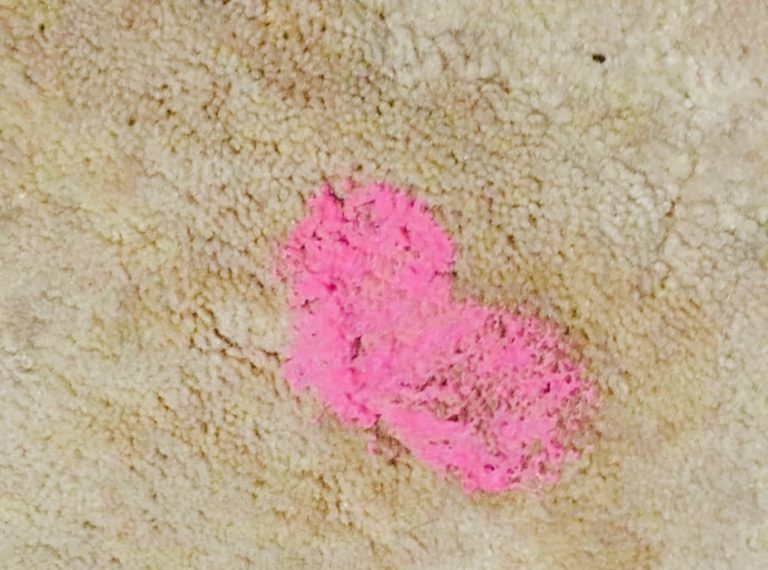


How we loosen dried slime with white vinegar
Start by lifting any loose, hardened pieces with your fingers or the edge of a spoon. Work from the outside of the spot toward its center, without pulling at the carpet yarns. If the slime holds tightly to the fibers, stop scraping rather than cutting or tugging at them.
- Mix about two parts white vinegar to one part warm water, the same ratio as two-thirds of a bucket of vinegar to one-third of a bucket of water.
- Apply the mixture to the slime and use a soft brush to gently loosen it. Keep the brush moving lightly over the affected fibers rather than scrubbing one point.
- Blot with clean, dry white terry towels. Lift what transfers to the towel, switch to a clean section, and repeat the treatment if slime remains.
- Once the carpet is dry, vacuum the area to pick up loosened material.
White vinegar can help loosen slime, but the remaining dye or ingredients may need different treatment. More liquid and harder scrubbing are not automatically better: they can spread color or leave the carpet wet beneath the surface.
How we handle wet slime before it dries
For a fresh spill, lift the bulk of the slime first with a spoon or another blunt edge. Draw it inward so it does not spread across more carpet. Blot any remaining moisture with a clean white towel instead of rubbing. Once the excess is gone, treat residue in small sections using the vinegar-and-water steps above if the carpet material allows it.
How to choose an approach without vinegar
If you prefer to avoid vinegar and rubbing alcohol, begin with careful mechanical removal. For a small patch, ice held against the slime in a sealed bag may firm it enough to lift in pieces. Keep meltwater off the carpet where possible, and do not force apart fibers that remain stuck. Blot any dampness and vacuum only after the spot has dried.
A carpet cleaner approved by the carpet manufacturer may be another option. Check that a product is intended for your carpet material before applying it. Adhesive removers and rubbing alcohol may affect dyes, backing, or leave their own residue, so a product that works on a hard surface is not necessarily a good choice for carpet.
How carpet material and remaining color affect the result
Before applying the vinegar mixture broadly, test a small, inconspicuous area and let it dry so you can check for color change or texture damage. Wool and other delicate fibers need particular care; follow the carpet maker's cleaning guidance rather than treating every carpet alike. Use less moisture where liquid could reach the backing.
After the slime lifts, check the area in daylight. A colored mark may be dye left by the slime rather than material still stuck to the pile. If the spot feels sticky after treatment, lightly blot with a clean towel dampened with plain water, then blot dry. Let it dry fully before deciding whether more cleaning is needed.
What affects the work involved in a cleaning estimate
The size of the spot, whether the slime is wet or hardened, its color, the carpet fiber, and any products already used can change how much treatment a stain needs. A small surface deposit is different from slime worked deep into the pile. Tell us what happened and what you have tried so we can discuss the affected area when providing an estimate.
When we can help with a stubborn spot
If a gentle second attempt still leaves stuck-on material, the carpet changes color or texture during testing, or the stain covers a larger area, stop before repeated brushing causes more damage. We provide carpet cleaning in Katy and the Houston area, including Spring, TX. Explore our carpet cleaning service, or call or text (832) 303-3546 for a free estimate and to check availability.