
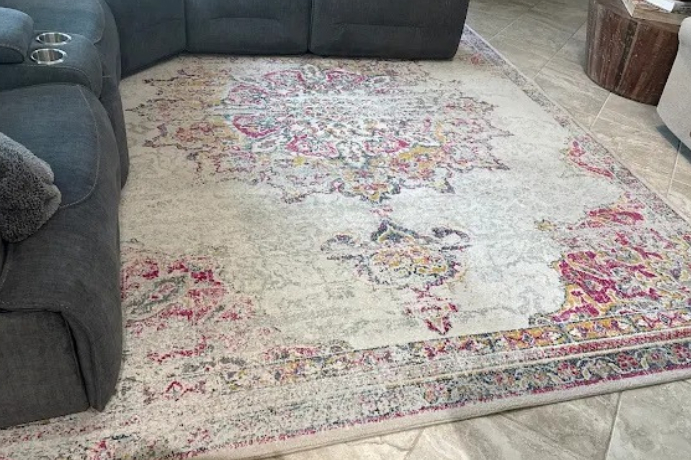


What daily traffic does to an area rug
In a hallway, entryway or path between living room furniture, footsteps repeatedly press on the same part of a rug. Fibers bend, grit works deeper into the pile, and the surface can begin to look darker or flatter than the edges. Furniture legs add concentrated pressure, while shoes and pets can bring in more abrasive soil. The result depends on the rug’s fiber, weave, pile height and how often that path is used.
A dark lane does not always mean a stain. Embedded dirt can change the color you see, while flattened pile can reflect light differently. Over time, abrasion may break fibers or thin the rug. Cleaning can remove soil; it cannot rebuild missing yarns or reverse permanent wear.
Signs of soil and signs of permanent wear
Compare the busy path with a protected area, such as a section beneath furniture. Loose grit between fibers, dust released during appropriate vacuuming, or a traffic lane with substantial surface residue point toward soil that cleaning may improve. A color difference that changes when you brush the pile in another direction can indicate pile distortion rather than a removable stain.
Thinning pile, broken yarns, exposed backing, missing sections and frayed edges point toward physical damage. Sunlight can also fade an exposed section without leaving removable dirt. If soil and wear occur together, cleaning may brighten the rug while the underlying traffic pattern remains visible. We provide professional area rug cleaning for homeowners throughout Greater Houston.
How fiber and construction affect the result
- Wool: Its fibers can be resilient, but trapped grit still causes abrasion. Cleaning must account for the natural fiber and the stability of its dyes.
- Synthetic pile: Nylon, polyester and polypropylene differ in how they respond to pressure. Removing dirt may improve the appearance of matting, but permanently crushed fibers may stay flat.
- Cotton and flatweaves: Without a deep pile, traffic may show as thinning yarns, loose threads or stressed edges. Some cotton rugs can shrink or lose shape if washed improperly.
- Silk, viscose and other delicate rugs: Abrasion and unsuitable moisture or agitation can make a busy walkway a poor location for these materials.
Check the rug’s care instructions before using water, a spot cleaner or a rotating vacuum brush. For delicate, loosely woven or fringed rugs, suction-only vacuuming may be the safer option when the rug’s instructions recommend it.
Care for hallways, entryways and Houston-area weather
Hallways concentrate footsteps into a narrow strip. Entryways add soil from shoes and pet paws. Around Houston, Katy, Cypress, Spring and The Woodlands, rain can bring mud and damp debris indoors; humidity can also slow drying when a rug becomes wet. Use an entrance mat to intercept grit, and remove outdoor shoes when practical. Promptly address tracked-in moisture rather than leaving it beneath a rug over hardwood or another moisture-sensitive floor.
For many busy living rooms, vacuuming two or three times a week is a practical starting point. An entryway rug may need attention more often, potentially daily when visibly soiled. Adjust to the amount of grit, shedding and use rather than following a calendar alone. Rotating a suitable rug every three to six months can distribute foot traffic and sunlight exposure, although it will not undo existing damage.
A compatible rug pad can reduce sliding, wrinkling and friction against the floor, which may help limit avoidable stress on the rug’s edges and backing. Choose a pad that suits both the rug and the flooring beneath it: some materials can interact with floor finishes or trap moisture. A pad cannot prevent the pile itself from wearing under repeated footsteps.
What cleaning, binding and replacement can address
Professional cleaning is worth considering when ordinary vacuuming no longer lifts accumulated soil or a traffic lane remains noticeably dirty. If flattened fibers are held down partly by soil, cleaning may improve their appearance. Permanently crushed pile, sun fading and broken fibers require different expectations. Avoid repeated wet cleaning of a stubborn lane, especially on a rug with uncertain dyes, backing or fiber content.
If an edge is fraying but the rest of the rug remains usable, area rug binding may help reinforce a suitable rug and give the edge a finished appearance. The rug’s construction and extent of damage affect whether binding makes sense. Widespread thinning, exposed backing or missing yarns can make replacement a more practical choice than cleaning or edge work alone.
What changes the scope and cost of rug care
Start with the rug’s size, material and condition. A larger surface has more area to clean; delicate fibers or unstable dyes may call for different handling than a sturdy synthetic rug. Deeply embedded grit, spills, pet accidents and moisture that has reached the backing can make the work different from cleaning a lightly soiled surface. Frayed edges introduce a separate decision about binding rather than soil removal.
We provide professional area rug cleaning and binding for suitable rugs. To choose the useful next step, note where the traffic lane sits, whether the pile is thin or merely flattened, and whether the rug has been wet. Those details help separate a cleaning goal from an edge-repair or replacement decision.
What Happens to Area Rugs With Daily Foot Traffic?
Every time someone walks across an area rug, pressure is applied to its fibers, backing, and underlying foundation. The amount of stress depends on the rug’s construction, fiber type, pile height, and the frequency of use.
In lightly used rooms, these changes may develop slowly. In busy spaces, thousands of footsteps can affect the same sections of a rug over weeks and months.
Common effects of daily foot traffic include:
- Flattened or compressed rug fibers.
- Dirt becoming embedded in the pile.
- Visible dark traffic lanes.
- Uneven texture and pile direction.
- Fiber abrasion and gradual thinning.
- Fraying along exposed edges.
- Increased wear near furniture.
- Changes in the rug’s overall appearance.
Some effects result from removable soil, while others are caused by physical wear. Knowing the difference helps homeowners avoid unnecessary cleaning attempts and make better decisions about rug care.
Why Foot Traffic Causes Rug Fibers to Flatten
One of the earliest signs of heavy foot traffic is flattened pile. When people repeatedly walk across the same section of a rug, the fibers bend and compress under pressure.
Some fibers naturally recover their shape after the pressure is removed. Others gradually lose resilience, especially when dirt and abrasion contribute to ongoing wear.
Flattening is commonly visible in:
- Walkways between furniture.
- Living room seating areas.
- Hallways and entryways.
- Spaces near kitchen islands.
- Areas beside beds.
- Paths leading to exterior doors.
A flattened rug may appear darker or lighter depending on the direction of the fibers and how light reflects from the surface.
Professional cleaning may improve some types of matting by removing soil and helping suitable fibers regain their appearance. However, permanently crushed or damaged fibers may not return to their original condition.
How Dirt and Grit Accelerate Area Rug Wear
Foot traffic does more than compress rug fibers. It also pushes dirt, sand, and other particles deeper into the material.
Small abrasive particles can become trapped between fibers. As people walk across the rug, these particles create friction that contributes to gradual wear.
This process is particularly important in homes where people frequently wear outdoor shoes indoors.
Common sources of abrasive soil include:
- Sand and dirt tracked in from outside.
- Dust carried through open doors.
- Soil from pets’ paws.
- Debris from garages and patios.
- Small particles collected in entryways.
- Outdoor residue carried on footwear.
Over time, abrasive particles may contribute to fiber breakage and a worn appearance.
Vacuuming removes loose soil before repeated footsteps push it deeper into the rug. Professional cleaning can help address accumulated contamination that routine maintenance does not adequately remove.
Does Walking on Area Rugs With Shoes Cause More Damage?
Wearing outdoor shoes on area rugs can increase the amount of abrasive dirt introduced into the fibers.
Shoe soles may carry sand, gravel, soil, moisture, and other debris that becomes embedded with repeated footsteps.
The effect depends on the type of footwear, surrounding environment, and rug material.
To reduce preventable wear:
- Remove outdoor shoes when practical.
- Use entrance mats near exterior doors.
- Clean heavily used rugs frequently.
- Address muddy footprints promptly.
- Vacuum areas where people regularly walk.
Walking barefoot or in indoor footwear can reduce tracked-in outdoor debris, although natural body oils may still accumulate over time.
How Pets Contribute to Area Rug Wear
Pets add another source of activity to area rugs. Dogs and cats may repeatedly walk, run, rest, or play on the same surfaces.
Pet nails can catch certain fibers, while paws may carry soil and moisture indoors.
Pet-related rug concerns include:
- Embedded hair and dander.
- Tracked-in dirt.
- Snagged fibers.
- Scratching and pulling.
- Repeated wear in favorite resting areas.
- Urine accidents and odor contamination.
Regular grooming, clean paws, and prompt accident cleanup can help reduce some of these problems.
If urine penetrates the rug backing or foundation, specialized professional cleaning may be necessary. Complete odor or stain removal cannot always be guaranteed.
Why Rug Edges and Corners Wear Out
Area rug edges can experience significant stress from foot traffic, vacuuming, furniture movement, and repeated contact with shoes.
When corners curl or edges begin to fray, the rug may become more vulnerable to further damage.
Common signs of edge wear include:
- Loose binding.
- Frayed yarns.
- Unraveling corners.
- Exposed backing.
- Damaged fringe.
- Uneven or curling edges.
Ignoring edge damage can allow deterioration to spread.
UpFront Home Services offers area rug binding services for suitable rugs, which may help reinforce worn edges and improve their finished appearance.
Repair suitability depends on the rug’s material, construction, and extent of damage.
Can Heavy Furniture Make Rug Wear Worse?
Furniture creates concentrated pressure on area rugs, particularly beneath legs and heavy bases.
Over time, this pressure can compress fibers and leave visible indentations.
When furniture is moved, the affected sections may look different from surrounding areas.
Furniture-related wear can include:
- Permanent pile crushing.
- Deep indentations.
- Localized discoloration.
- Fiber distortion.
- Damage from dragging furniture.
Use suitable furniture pads or supports when appropriate, and avoid dragging heavy furniture across rugs.
Some indentations may improve with professional treatment, but permanently damaged fibers may not fully recover.
How Houston’s Climate Can Affect High-Traffic Area Rugs
Homes throughout Houston and surrounding communities experience conditions that can influence how quickly rugs become soiled.
Rainfall, humidity, outdoor soil, and everyday household activity can contribute to dirt and moisture being carried indoors.
In neighborhoods throughout Katy, Cypress, Spring, and The Woodlands, rugs near exterior doors may collect mud and damp debris after rainy weather.
Common local concerns include:
- Muddy footprints after rainfall.
- Soil tracked in from landscaping.
- Pet activity in wet yards.
- Humidity slowing the drying of damp rugs.
- Dust and pollen collecting in rug fibers.
- Frequent indoor traffic during hot or rainy weather.
Moisture should not remain trapped beneath rugs, especially when they sit over hardwood or other moisture-sensitive flooring.
If a rug becomes thoroughly wet, it should be dried appropriately. Significant water exposure may require professional evaluation.
Why Rug Padding Matters in High-Traffic Areas
A suitable rug pad can help stabilize an area rug and reduce unnecessary movement across the floor.
Without appropriate padding, a rug may slide, wrinkle, or shift as people walk across it.
Repeated movement can place additional stress on the rug’s backing and edges.
Benefits of compatible rug padding may include:
- Reduced slipping and movement.
- Additional cushioning.
- Improved rug stability.
- Less friction against the flooring beneath.
- More comfortable walking surfaces.
Choose padding appropriate for both the rug and the underlying floor.
Some backing and pad materials can react with certain flooring finishes or trap moisture. Always confirm compatibility before installation.
How to Protect Area Rugs From Excessive Foot Traffic
Preventive care is one of the most effective ways to reduce unnecessary rug damage.
Although no rug can remain completely unchanged under daily use, proper maintenance can help preserve its appearance and structure.
Helpful habits include:
- Vacuum regularly using suitable equipment.
- Remove outdoor shoes when practical.
- Use entrance mats to collect tracked-in soil.
- Rotate rugs periodically.
- Use compatible rug padding.
- Clean spills promptly.
- Keep pet nails appropriately maintained.
- Avoid dragging heavy furniture across rugs.
- Address fraying edges before damage spreads.
- Schedule professional cleaning based on use and condition.
These practices help reduce accumulated soil and distribute wear more evenly.
They are particularly valuable for rugs placed in busy family rooms, hallways, and entryways.
In-Home vs. Off-Site Area Rug Cleaning
UpFront Home Services offers in-home and off-site rug cleaning options depending on the rug’s material, condition, and cleaning needs.
In-home cleaning may be suitable for certain synthetic rugs with ordinary surface soil.
Off-site cleaning allows additional inspection and treatment options for rugs requiring more extensive care.
Rugs that may benefit from off-site cleaning include:
- Heavily soiled area rugs.
- Some natural fiber rugs.
- Delicate or specialty rugs.
- Rugs with significant pet contamination.
- Rugs requiring cleaning on both sides.
- Rugs that may be difficult to dry safely in the home.
Off-site cleaning can be especially helpful when a rug sits over hardwood flooring, where excessive moisture during in-home cleaning could affect the floor beneath.
The appropriate method depends on the rug’s construction, fiber type, dyes, and existing condition.
When Is an Area Rug Too Worn to Clean?
Professional cleaning can remove many types of accumulated soil, but it cannot repair every form of physical deterioration.
Some rugs eventually reach a condition where cleaning provides limited improvement or where replacement becomes more practical.
Warning signs include:
- Large sections of missing pile.
- Exposed or deteriorating backing.
- Extensive fiber breakage.
- Severe unraveling.
- Permanent crushing throughout the rug.
- Structural damage that makes handling unsafe.
- Contamination that cannot be adequately treated.
For valuable, handmade, or sentimental rugs, specialized restoration may still be worth considering.
For inexpensive rugs with extensive damage, replacement may sometimes be more economical than cleaning and repair.
When to Schedule Professional Area Rug Cleaning
Even with consistent vacuuming, dirt can gradually accumulate within an area rug.
Professional cleaning may be appropriate when routine maintenance no longer produces satisfactory results.
Consider scheduling service when:
- Traffic lanes remain visibly dark.
- The rug feels gritty or heavily soiled.
- Colors appear dull from accumulated dirt.
- Odors persist after routine cleaning.
- Pet contamination affects the rug.
- Vacuuming no longer improves its appearance.
- The rug has not been professionally cleaned in an extended period.
UpFront Home Services can assess the rug and recommend an appropriate cleaning approach based on its material and condition.
Early attention to accumulated soil may help reduce the abrasive wear associated with repeated foot traffic.
Professional Area Rug Cleaning in the Greater Houston Area
Foot traffic gradually affects area rugs by compressing fibers, embedding abrasive dirt, creating traffic patterns, and contributing to uneven wear. Although some changes are unavoidable, regular vacuuming, appropriate rug padding, periodic rotation, and professional cleaning can help reduce preventable damage. Understanding the difference between removable soil and permanent wear is important when deciding how to maintain or restore a rug.
UpFront Home Services provides professional area rug cleaning in The Woodlands, TX and serves homeowners throughout the Greater Houston area, including Katy, Cypress, and Spring. Our team evaluates rug materials and conditions to determine appropriate cleaning methods, including in-home and off-site options. Contact UpFront Home Services today to request an estimate and schedule professional area rug cleaning.