
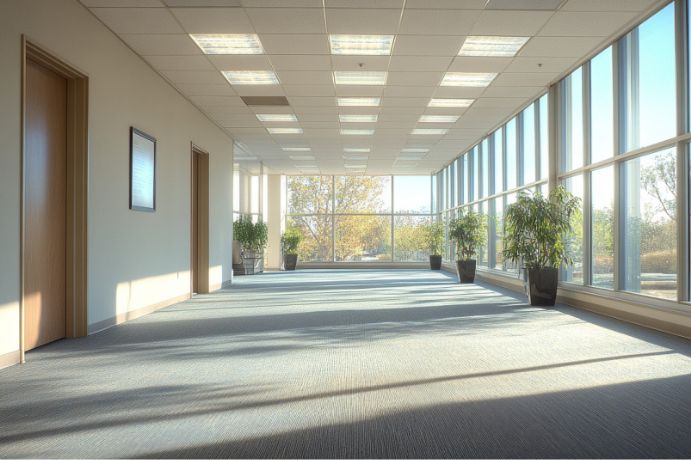


Set a cleaning schedule by traffic zone
We recommend starting with professional cleaning every 3 to 6 months for a typical commercial carpet, then setting separate intervals for areas that collect soil at different rates. An entrance and a private office rarely need the same schedule.
- High traffic: Plan professional cleaning every 1 to 3 months for busy entrances, office lobbies, retail walkways and restaurant carpet.
- Moderate traffic: Plan every 3 to 6 months for general office areas and waiting rooms.
- Low traffic: An annual cleaning may suit private offices, conference rooms and storage areas.
Use those ranges as starting points for deep cleaning, not as a reason to leave spills or visible soil until the next appointment. If a lobby soils quickly but adjoining rooms remain clean, move the lobby forward rather than cleaning every room at the lobby's pace.
Adjust the schedule for how you use the space
Business type helps narrow the interval. General office carpet often fits the 3-to-6-month range; a quiet private office may need less frequent cleaning. Retail stores and restaurants commonly need cleaning every 2 to 3 months because of customer traffic and spills. Schools and colleges can plan quarterly cleaning or coordinate it with seasonal breaks. For healthcare facilities, use monthly cleaning as a planning point while following the facility's own infection-control requirements.
Rain or snow can bring more moisture, dirt and salt through an entrance, making its carpet need attention sooner. Entry mats can reduce tracked-in soil when they are kept clean. Frequent spills, visible traffic lanes and the amount of soil carried in from outside also matter, even when visitor numbers stay the same.
Use routine care between deep cleans
Deep cleaning addresses soil that routine care leaves behind. Interim maintenance keeps the carpet usable between those visits: vacuum high-traffic areas daily, keep entry mats clean and respond to spills promptly with a product suitable for the carpet fiber. Vacuum quieter rooms according to use and check them for accumulating dust.
Blot a fresh spill rather than rubbing it across the fibers. Treating a spot and vacuuming regularly can prevent buildup, but neither replaces a scheduled deep clean when traffic lanes remain soiled. Moving furniture periodically can also expose areas that need vacuuming and help distribute wear.
Match the plan to the carpet and its care instructions
Carpet fiber and condition affect how you clean it. Nylon and polyester can withstand regular cleaning; wool calls for more delicate care, with a six-month professional-cleaning interval as a starting point. Check the carpet manufacturer's care instructions and warranty terms before settling on a method or schedule. Product-specific requirements take priority over a general interval.
Hot water extraction is a deep-cleaning method we discuss for commercial carpet. The appropriate approach also depends on the fiber, existing stains and how much drying time the space can accommodate. Cleaning can remove soil from an older carpet, but it cannot restore fibers worn down by years of use.
Move a cleaning forward when soil becomes visible
Look at entrances and main walkways in normal lighting. Darkened traffic lanes, recurring spots, a dull appearance after vacuuming or soil that returns quickly after spot cleaning are reasons to reassess the schedule. Compare those areas with carpet under furniture or in a lightly used room. That contrast helps distinguish accumulated soil from a carpet's original color or permanent wear.
Understand what affects cleaning cost and timing
For a useful commercial carpet cleaning estimate, define the area to be cleaned and which zones need attention. Square footage, the number of rooms, traffic-lane soil, spills, carpet material and how often cleaning is needed can change the scope. Cleaning only the busy zones on an additional visit may be more practical than giving an entire building the same short interval.
Plan access around your operating hours and allow for drying before normal foot traffic resumes. After cleaning, carpet typically takes 4 to 6 hours to dry, although the cleaning method and ventilation affect the time. Fans or open windows, where appropriate for the building and weather, can help air move through the space.
Choose a plan you can maintain
We can tailor a commercial carpet cleaning plan around your traffic patterns, carpet material and seasonal conditions. When comparing providers, look for a clear scope that identifies the areas being cleaned, the proposed interval, the cleaning method and the expected drying window. Check reviews and relevant certifications without treating either as a substitute for a plan that fits your carpet. Contact UpFront Home Services to discuss a schedule for your space.
Factors Influencing Commercial Carpet Cleaning Frequency
1. Foot Traffic Levels
- High-Traffic Areas: Retail stores, office lobbies, and restaurants often experience significant foot traffic. These areas require cleaning every 1-3 months to maintain cleanliness and hygiene. High foot traffic increases dirt accumulation and wear, making frequent cleaning a necessity.
- Moderate-Traffic Areas: General office spaces and waiting rooms typically see less foot traffic. Cleaning these carpets every 3-6 months is usually sufficient.
- Low-Traffic Areas: Spaces like private offices, conference rooms, or storage areas may only need cleaning once a year. However, periodic maintenance ensures that dust and allergens do not accumulate.
2. Business Type
- Healthcare Facilities: Due to stringent hygiene requirements, carpets in clinics and hospitals must be cleaned monthly. These areas are prone to the accumulation of germs and bacteria, making frequent professional cleaning essential.
- Educational Institutions: Schools and colleges should clean carpets quarterly or during seasonal breaks to minimize allergens and maintain a safe learning environment.
- Retail Stores and Restaurants: These establishments often need carpet cleaning every 2-3 months to address spills, stains, and high customer foot traffic.
3. Carpet Material and Quality
- Synthetic Fibers: Carpets made from materials like nylon or polyester are durable and can withstand frequent cleaning. Regular maintenance preserves their color and texture.
- Natural Fibers: Wool and other natural materials require more delicate care. Cleaning these carpets every 6 months is ideal to prevent wear and maintain their luxurious appearance.
4. Seasonal Considerations
- During rainy or snowy seasons, carpets are more likely to accumulate dirt, moisture, and salt. Increasing cleaning frequency during these times helps prevent permanent damage and keeps carpets looking their best.
UpFront Home Services specializes in tailored carpet cleaning solutions to meet your business’s specific needs, ensuring long-lasting results and customer satisfaction.
Benefits of Regular Commercial Carpet Cleaning
1. Improved Indoor Air Quality
- Carpets act as filters, trapping allergens, dust, and pollutants over time. Regular cleaning removes these contaminants, improving indoor air quality and reducing health risks for employees and visitors. By maintaining clean carpets, you can ensure a fresher and healthier workspace that minimizes respiratory issues and allergies for everyone in the building.
2. Enhanced Professional Appearance
- Clean carpets contribute to a professional and inviting environment. A well-maintained workspace reflects positively on your brand and creates a lasting impression on clients. Clients and visitors are more likely to perceive your business as trustworthy and organized when your carpets are spotless and odor-free.
3. Increased Carpet Lifespan
- Dirt and debris can break down carpet fibers, leading to premature wear. Regular professional cleaning from UpFront Home Services helps extend the lifespan of carpets, protecting your investment and reducing replacement costs. Preventative maintenance is more affordable than replacing worn-out carpets frequently.
4. Healthier Workplace
- Regular carpet cleaning reduces the spread of bacteria, germs, and allergens, which promotes a healthier workspace, improving employee productivity and well-being. A clean environment also reduces sick days and fosters positive morale among employees.
How to Choose a Professional Carpet Cleaning Service
1. Experience and Certifications
- Choose a provider with a proven track record in commercial carpet cleaning. Certifications from organizations like the IICRC (Institute of Inspection Cleaning and Restoration Certification) indicate expertise. Experienced cleaners are more likely to understand the specific requirements of commercial carpets and provide superior results.
2. Tailored Cleaning Plans
- Opt for services that offer customized cleaning schedules based on your business’s unique needs. UpFront Home Services excels at providing personalized solutions. A tailored plan ensures that your carpets are cleaned at the optimal frequency, balancing cleanliness and cost-effectiveness.
3. Eco-Friendly Products
- Ensure the cleaning company uses environmentally safe and non-toxic products to protect employees and visitors from harsh chemicals. Eco-friendly products are not only safer but also more sustainable, reducing your business’s environmental impact.
4. Transparent Pricing
- A reliable service provider will offer clear pricing and a detailed scope of work to avoid unexpected costs. Transparency builds trust and ensures you know exactly what services you’re paying for.
5. Reputation and Reviews
- Check reviews and testimonials to ensure the company has a strong reputation.