

Find the source before treating the carpet
Old urine spots are not always visible. You may first notice the smell when the weather changes, even if the carpet looks clean. Close the blinds or curtains, then scan the affected area with a UV light. Mark suspected spots so you can treat the whole area rather than only the place where the smell seems strongest. Keep the light out of your eyes. A glow helps you locate a spot to investigate; it does not, by itself, identify what caused it.
How to treat dried urine step by step
Locate the affected area and apply a pet enzyme treatment generously enough to reach the urine. Follow the product label for carpet compatibility and application. If urine has reached the padding, a syringe can help deliver treatment below the carpet surface.
Allow the enzyme treatment to sit for 30 minutes, or follow a longer contact time if the product label requires it. Keep the treated area undisturbed during that period.
Flush the treated spot with water and extract it with a wet vacuum. A subsurface extraction tool can help remove moisture from the padding. Avoid leaving the carpet and padding soaked.
Dry the area thoroughly. An air mover can speed drying; fans and heat can also help when used safely. Check for odor again once the carpet is dry, since a wet carpet can smell different from a dry one.
There is no single amount of enzyme cleaner that suits every old stain. The affected area and how deeply the urine penetrated matter. Use enough to reach the contamination without flooding surrounding carpet, and follow the cleaner's directions rather than adding more products at the same time.
When the odor has reached below the carpet
A spot that smells again after cleaning and drying may extend into the backing or padding. A stronger smell after shampooing can also indicate that moisture reached an old urine deposit without removing it. Repeatedly wetting the carpet is unlikely to help if extraction cannot reach the affected layer. These are clues, not a way to determine the exact depth from the surface.
If treatment and subsurface extraction do not resolve the odor, the padding may need replacement. In some cases, the subfloor may need treatment and sealing. That is a different decision from cleaning the visible carpet fibers, so consider professional help before pulling up carpet or replacing materials.
What home remedies and carpet cleaners can do
Baking soda may absorb some surface odor, but sprinkling it over carpet does not reach urine in the padding. Vinegar can introduce more moisture and has its own odor; avoid mixing it with an enzyme treatment or other cleaning chemicals. These limitations apply whether the dried urine came from a dog, cat or person.
A carpet cleaner can help flush and extract a treated spot, but shampooing the surface alone may leave old urine below it. If the smell persists after shampooing, let the area dry, locate the affected spots and treat the source before another extraction. Do not keep adding water when you cannot remove it from the padding.
Visible stains need a separate decision
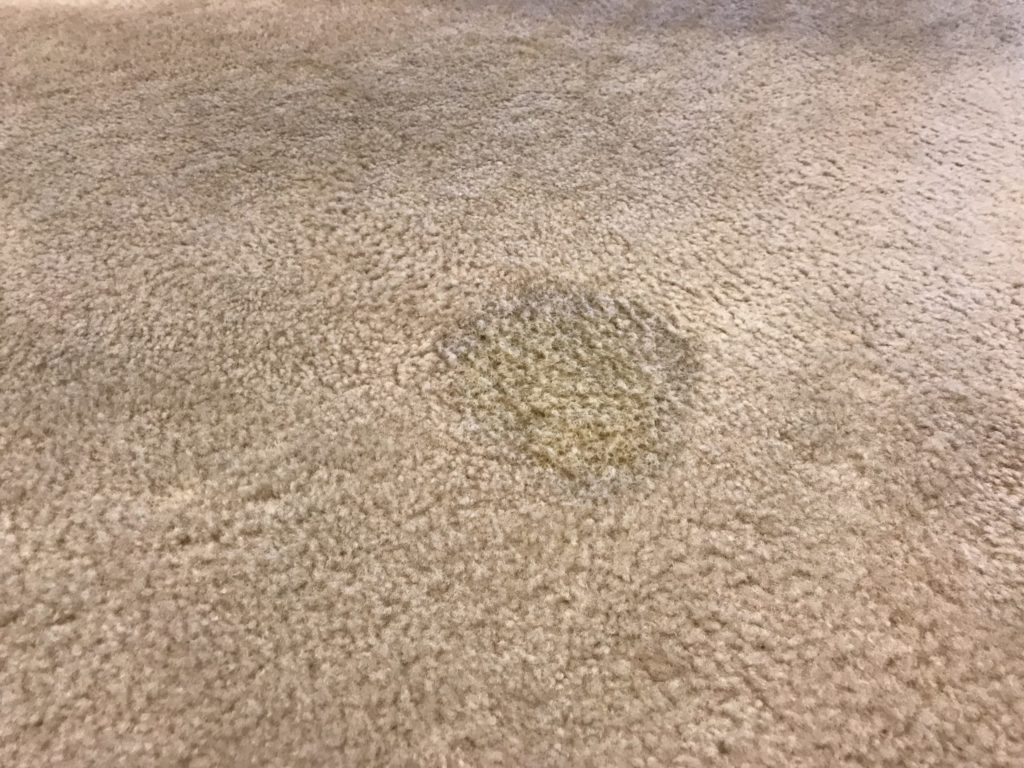
Removing an odor does not necessarily remove an old stain. If discoloration remains after cleaning, an industrial peroxide stain treatment is another option. Results depend on the carpet material, the age of the mark and whether the fibers have changed color. No stain treatment can be counted on to reverse permanent color change.
Peroxide products can affect carpet dyes and finishes. Check the product directions and test an inconspicuous area before treating a visible spot. Keep children and pets away during application and until the area is dry, following the product's safety instructions. Do not combine peroxide with vinegar or other cleaners.
When professional help makes sense
Consider professional help when an old odor returns after enzyme treatment and extraction, several areas are affected, or the padding may need attention. The number and size of spots, how deeply urine has penetrated, and whether padding or subfloor work is needed all affect the scope of a job. A visible stain may also need separate treatment from the odor.
We provide professional carpet cleaning in Katy and the Houston area, including Spring, TX. For a free estimate and availability, call or text UpFront Home Services at (832) 303-3546. You can also visit UpFront Home Services.