

Why shaded siding grows mildew
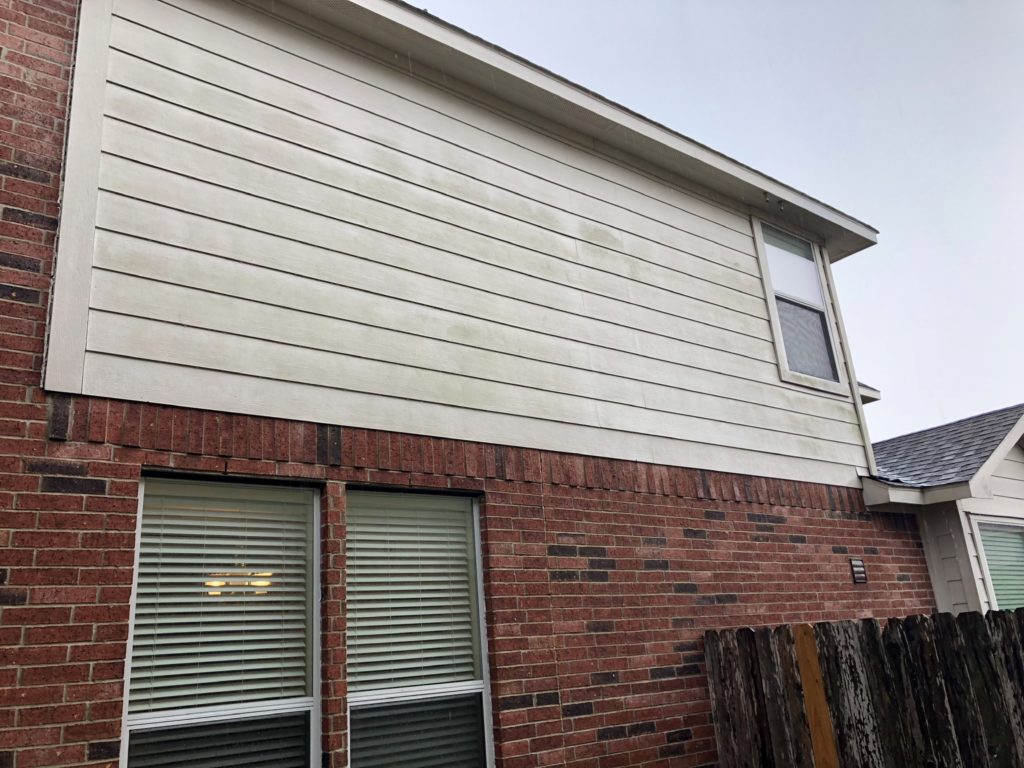
If black or green growth keeps appearing on the north side of your house, pay attention to how long that wall stays damp. A shaded surface may dry more slowly after rain or sprinkler spray. Nearby plants can also limit airflow. Cleaning removes growth from the surface, but a wall that repeatedly stays damp can develop it again.
Identify the growth before choosing a cleaning method
People often call any dark patch on siding mildew. Mildew commonly refers to surface growth, mold is a broader term for fungal growth, and algae is a different organism that may appear green. Color alone will not reliably identify what is on your house. If growth seems to extend behind siding, or staining returns quickly alongside a leak, investigate the moisture source rather than treating the visible patch as the whole problem.
Reduce the moisture that lets growth return
Walk around your house after rain and when sprinklers run. Look for siding that stays wet, sprinkler heads spraying a wall, overflowing gutters, downspouts discharging beside the house, or vegetation pressed against the exterior. Where practical, redirect spray, address drainage problems and keep plants from holding moisture against siding. These steps can help a cleaned surface dry; they do not replace cleaning growth that is already there.
Use annual soft washing as a maintenance starting point
We recommend annual soft washing maintenance, particularly for a north-facing section where growth tends to return. Our soft washing uses a disinfectant that attacks mildew and removes it from the surface. That differs from relying on pressure to strip visible growth away. An annual wash is a starting schedule, not a promise that mildew will stay away for twelve months. Check shaded or frequently damp sections between cleanings and respond to new growth before it spreads.
Choose a siding-safe approach to DIY cleaning
If you plan to clean a small, reachable area yourself, follow your siding manufacturer's cleaning guidance and the directions for any product you use. Test an inconspicuous spot first. Avoid directing a strong pressure-washer stream at siding, seams or openings: excessive pressure can mark a surface or drive water where it should not go. We have seen pressure washing leave visible patterns on siding. Soft washing and pressure washing equipment can also be dangerous when handled incorrectly. For a large area, hard-to-reach growth or a surface you are unsure how to clean, professional cleaning may be the safer choice.
Understand what affects cleaning effort and results
The size of the affected area, how much growth has accumulated, access to the wall and the surface material can all change the work involved. Results also depend on what happens afterward: a wall that receives repeated sprinkler spray or stays shaded and damp may need attention sooner than one that dries readily. If staining persists despite cleaning, check for a continuing moisture problem before repeating the same treatment.
Plan exterior maintenance in Katy and the Houston area
We provide professional pressure washing services in Katy and throughout the Houston area, including soft washing for exterior mildew. Start by checking the shaded sides of your house and noting where water reaches the siding. For a free estimate and availability, call or text us at (832) 303-3546. You can also visit UpFront Home Services.
Here’s How To Prevent Mildew On Outside Of House
Annual Soft Washing Maintenance! Look, the North side of your home is always going to attract mildew but if you wash this section annually it is far less likely for the problem to develop and spread. I highly recommend consistent maintenance when it comes to the exterior of your home.
What Is Soft Washing?
Soft Washing is a better and safer way to clean the outside of your home. It employs a disinfectant that attacks the mildew and removes it from the surface it was attached to.
This is a much different, safer, and more effective method than Pressure Washing. In fact, I have seen many homeowners employ the use of Pressure Washing on their siding and they totally draw doodles on their house.
Why Should You Hire A Professional?
Bottom line, Soft Washing and Pressure Washing Equipment can be very dangerous in the wrong hands. Beyond that the Home Owner versions that you can pick up in Home Depot simply don’t do the job nearly as well as the equipment a professional uses to complete the job.
At UpFront Home Services we provide Professional Pressure Washing Services In Katy and the entire Houston area! Check out our Pressure Washing and Soft Washing Service Here
Need An Honest UpFront Quote? Call or Text (832)303-3546 for a FREE Estimate and to check availability
UpFront Home Services
Call or Text (832)303-3546
Why do we love Katy? It’s rich History! Katy was originally known as Cane Island as it was named after a river that runs through the area. It was a vital hub for Rice in the region and to this day Katy holds an annual Rice Harvest Festival. We service the entire Houston area. Want to learn more about the City of Katy Click Here