
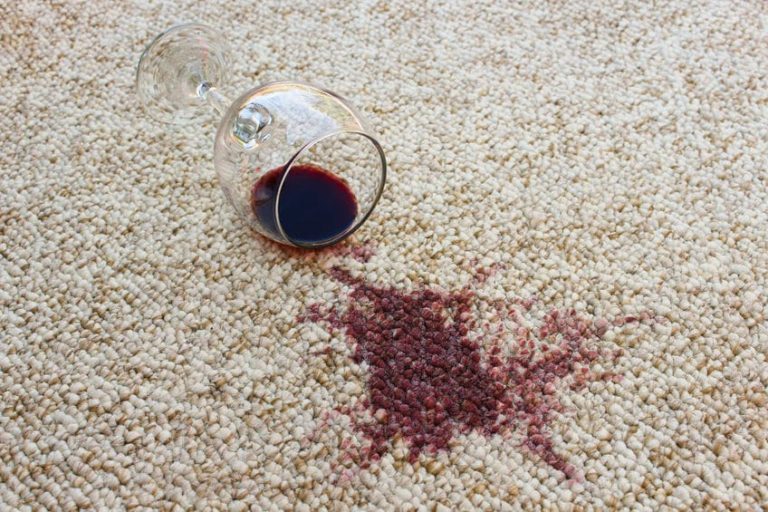


How to decide whether this method fits your carpet
We use Red 1 by Pro’s Choice to treat red stains in residential synthetic carpet. Do not use the steps below on wool carpet. If you do not know the fiber, check the carpet’s label or installation records before applying a remover. A stain may also be blood rather than spilled dye or juice, so identify what spilled if you can.
Before treating a visible spot yourself, test the remover on an inconspicuous area. Apply a small amount, follow the product’s directions, rinse and let the area dry. If the carpet color changes or the fibers look different, do not use it on the stain. Keep children and pets away from a treated area until it has been rinsed and dried.
What you can do at home before treatment
For a fresh spill, blot with a clean white cloth rather than rubbing the color into a wider area. Start at the outside of the spot and work inward. For a dried stain, avoid scraping hard enough to damage the fibers. Knowing whether the spill was red juice, fruit punch, food coloring or something else helps you avoid treating every red mark as the same problem.
Do not combine stain removers or add heat while a mixture of household products is in the carpet. If you plan to try a product, check its fiber and colorfastness directions first.
How we treat red stains in synthetic carpet
We apply Red 1 liberally to the stain and allow about 4 to 8 minutes for a reaction. The stain may turn yellow or disappear.
We rinse the affected area. For home extraction without a small carpet cleaner, the source method uses a little water and a shop vacuum. Only use a vacuum rated for liquid pickup, following its operating instructions.
If the stain does not react, we reapply Red 1 and cover the spot with a folded, damp white terry cloth. We then apply a steam iron on its lowest setting for no more than 5 seconds and rinse again to remove residue.
Heat is an additional step, not a reason to keep ironing a stubborn spot. An iron can damage carpet if it is too hot, touches the fibers directly or remains in place too long. We do not exceed two treatments. A dried stain may be worth treating, but its age alone does not tell you whether it will come out.
What affects the result and the work involved
The spill’s contents, how long it has been there, carpet fiber and any products already applied can change the result. Red food coloring or fruit punch may behave differently from blood, even when the marks look similar. A larger affected area, a stain that needs the second treatment, or residue from earlier attempts can also change the work involved. No remover is the best choice for every red mark or every carpet.
In Houston and Katy, you can call us about carpet cleaning and describe the spill, its approximate size and whether you have already treated it. Those details help make a stain discussion more useful than judging by color alone.
When to stop treatment and call us
Stop if a test area changes color, you discover the carpet is wool, or the spot remains after the two-treatment limit. More heat or repeated product applications are not a substitute for identifying the stain and fiber. We provide carpet cleaning in Houston and Katy. Call or text UpFront Home Services at (832) 303-3546 for a free estimate and to check availability. You can also visit UpFront Home Services.