
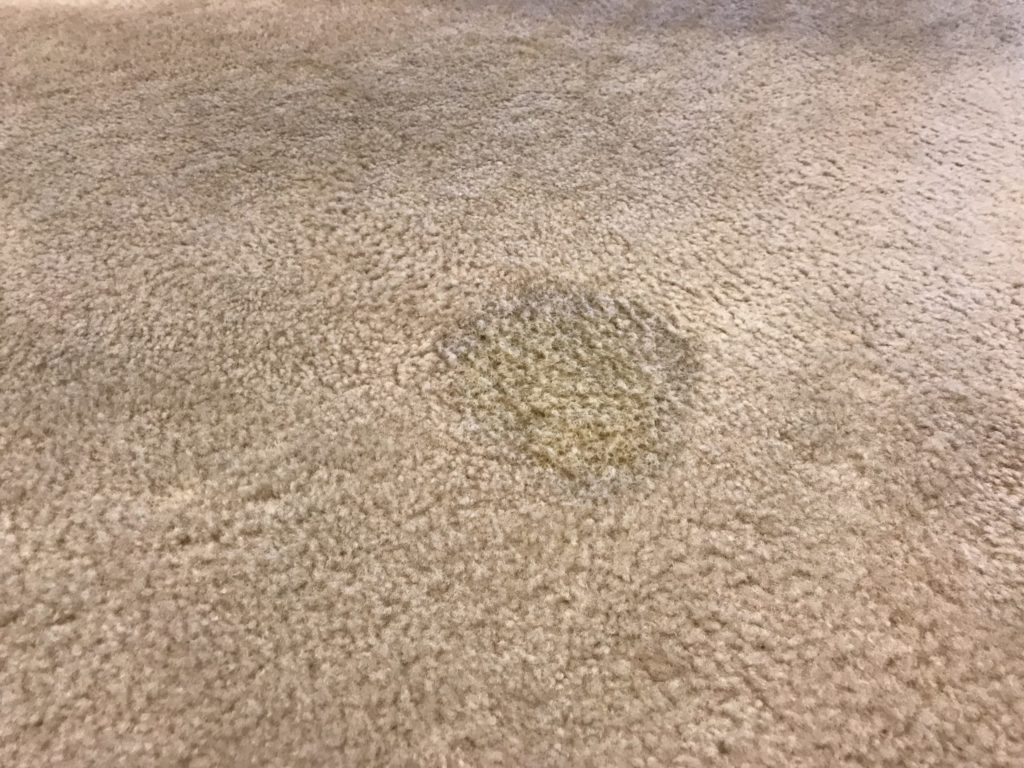


How to clean a fresh spill
Start as soon as you can. Removing solids before adding water limits how far you spread the mess. Wear disposable gloves, keep children and pets away from the area, and put soiled towels and debris in a bag for disposal. Blot rather than scrub: rubbing can push residue deeper into the carpet.
- Lift off the solids. For liquid and small pieces, use a Shopvac rated for wet pickup if you have one. Follow its manual for wet-use filter setup, and clean the waste tank after use. Do not use a regular household vacuum on wet carpet.
- Apply a small amount of cold water to the affected fibers. Our fresh-spot method allows about 30 seconds before extracting the liquid with a Shopvac. Work in small amounts so you do not soak the carpet backing.
- If color remains, test an enzyme spotter or carpet spotter in an inconspicuous area, then follow its label. Our original spot-treatment recommendations include Kemzyme and PC-45.
- Extract as much moisture as you can and let the area dry completely before checking for a remaining stain or smell.
Without a wet vacuum, lift solids with a disposable towel or stiff piece of cardboard, then blot liquid with clean towels. Dampen a fresh towel with cold water, press it onto the spot, and blot again with dry towels. Repeat with small amounts of water instead of pouring water into the carpet.
How to treat a dried or older spot
Gently lift dried material first, taking care not to pull at the carpet fibers. Dampen the remaining spot with cold water and blot it before applying a cleaner. An older mark may need more than surface blotting because residue can remain below the visible fibers.
For our older-spot method, mix four parts water with one part Kemzyme. Apply enough to wet the stained fibers, gently agitate them with a terry towel, and allow about 30 minutes of dwell time. Follow the product label if its directions differ. Wet the fibers with cold water, extract thoroughly with a Shopvac, and get the carpet as dry as possible. Vacuum thoroughly once it is dry. Professional carpet cleaners use hot water extraction for the extraction step.
Test any treatment in an inconspicuous area first. For wool, delicate fibers or a carpet with uncertain care requirements, check its care instructions and the cleaner label before applying an enzyme product. A colorfastness test does not establish that every cleaner is suitable for every fiber.
How we approach lingering odor
A clean-looking surface can still smell if residue remains in the fibers or beneath them. Remove the source, rinse out the cleaning product with controlled amounts of cold water, extract or blot away the moisture, and let the carpet dry before judging the result. If the smell returns, repeatedly adding fragrance or water will not remove trapped residue. Deeper extraction may be the better next step.
Baking soda is an optional deodorizing step after cleanup, not a substitute for removing vomit. On fully dry carpet, a light sprinkling can be left for several hours and then vacuumed thoroughly, provided your carpet and vacuum care instructions permit it. You can also skip baking soda and focus on residue removal and drying. Vinegar may affect some fibers or colors; test any household solution first, avoid combining cleaners, and do not use it in place of a product's directions.
For vomit on a hard floor, remove the material, clean the affected surface using a product appropriate for that flooring, and dry it. If the floor has seams or the spill reached a rug, check those areas too: odor can persist where liquid collected rather than where the visible mess landed.
What affects the result and cleanup effort
- Time: Prompt removal gives liquid less opportunity to reach the backing. A dried spot can take more careful treatment and extraction.
- Carpet and spill: Fiber type, color sensitivity, the amount of liquid and material in the spill, and how far it spread all influence which treatment is appropriate.
- Moisture: A spot that looks clear while wet can reappear as it dries. Additional water can also prolong drying, especially when indoor air is humid. Airflow can help the area dry.
Some discoloration may remain if the spill has affected the carpet's color. If a spot returns after drying, our older-stain guidance calls for treating the returning stain with Stain 1. Test it first and follow its label; do not layer products onto a wet area. If odor persists or the area repeatedly reappears, professional extraction is worth considering rather than continuing to saturate the same spot.
When to call UpFront Home Services
We provide professional carpet cleaning in Katy and the Houston area. If an older stain, recurring spot or lingering odor needs attention, call or text us at (832) 303-3546 for a free estimate and to check availability. The size and age of the spot, carpet material, and extent of residue can change the work involved. You can also explore UpFront Home Services carpet cleaning.