
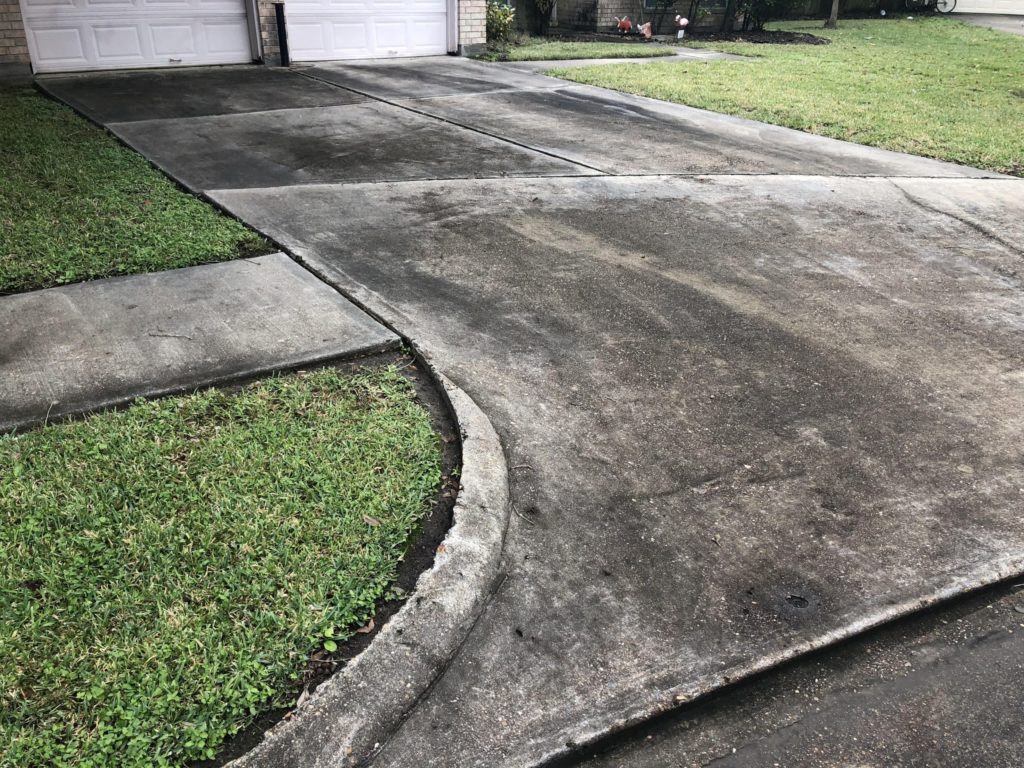


How we prepare and pressure wash a driveway
Clear the surface. Blow or sweep away leaves, loose dirt and other debris. Debris left in place can block cleaner and water from reaching the concrete evenly.
Pre-treat one section at a time. Choose a driveway cleaner suitable for the surface and soil, then follow its label for dilution, application and dwell time. Our guide allows a couple of minutes of dwell time, but the product label takes priority. Do not let the cleaner dry on the concrete.
Test the cleaning setup. Check a small, less-visible area before cleaning the full driveway. Begin with less aggressive pressure and increase only if the surface responds well.
Clean in steady passes. Work one section at a time with a surface cleaner or wand. Move slowly enough to lift the soil, overlap passes and keep the tool moving.
Rinse the loosened dirt. Rinse from the higher end of the driveway toward the lower end where the slope allows, rather than pushing dirty water back across clean concrete. Keep runoff out of storm drains.
How we choose a cleaner and protect nearby areas
Start with the condition of the driveway. Loose dirt may lift with water, while embedded grime or an oil spot may call for a cleaner labeled for that surface and stain. Apply only as directed, work in manageable sections and keep the product from drying during its label-directed dwell time.
Before applying a cleaner, move vehicles and loose items out of the work area. Protect nearby plants from spray and check where rinse water will travel. A product label can guide surface use and handling, but no cleaner should be treated as safe to wash into a storm drain. Keep chemical runoff contained and follow applicable local disposal requirements.
How we set pressure for the concrete
Our driveway guide uses 2,500 to 3,000 PSI as a reference range and a green tip for a hand wand. Neither is a setting that fits every driveway. An older, weakened, cracked, coated or sealed surface may need a gentler approach. Test a small area first; if the spray roughens the concrete, dislodges material or affects a coating, stop and change the plan.
Pressure is only one part of the result. Holding a wand too close or pausing over one spot concentrates the spray, even at a lower setting. Keep a consistent distance and avoid directing the stream at people, vehicles, joints or damaged edges. Wear eye protection and footwear that provides traction on wet concrete.
How we choose a surface cleaner or wand
A spinning surface cleaner is our preferred driveway tool. Its covered cleaning path can make broad areas easier to clean evenly. Move it at a steady pace in overlapping passes, without letting it sit running in one spot. Use a wand where the surface cleaner cannot reach, such as along an edge, while taking care around joints and loose material.
A homeowner washer may come with only a wand and interchangeable tips. You can still clean the driveway by dividing it into sections, using the green tip identified in our guide where a test patch shows it is suitable, and keeping the wand moving at a consistent distance. Avoid switching between narrow, close-up passes and wide, distant passes across the same slab: the difference can show as lines after rinsing.
How we work across the driveway
Clean each section thoroughly before moving to the next, and overlap the edges of adjacent passes. If one strip looks darker, check it after rinsing rather than immediately concentrating the spray on a single line. Uneven dwell time, a changing pace and inconsistent tool height can all produce a streaky result.
If you are following a driveway-cleaning video or YouTube demonstration, use its pass pattern as an example, not its pressure setting as a rule. Test your own concrete and equipment first. A surface cleaner, a hand wand and driveways in different condition will not respond identically.
How we handle stains and set expectations
General washing removes surface soil, but oil, rust and mildew may need different label-approved treatments for concrete. Identify the stain before selecting a product: a general driveway cleaner may do little for rust, while an oil spot can remain visible after the surrounding dirt is gone. Test a small area, follow the product directions and do not mix cleaners.
Stains that have penetrated the concrete may remain after washing. Uneven wear, previous repairs and differences between slabs can also become more noticeable once surface dirt is removed. More pressure is not a substitute for the right stain treatment and can damage the surface.
When conditions call for a different plan
Put off cleaning when rain would immediately wash an applied product away, when runoff cannot be managed or when the driveway is too slick to work safely. If concrete is flaking, crumbling or extensively cracked, avoid aggressive pressure. Coated or sealed areas also warrant a careful test before a full wash.
A washed driveway can remain damp for several hours or longer. Shade, humidity, airflow, surface texture and weather affect drying, so look for a uniformly dry surface rather than relying on a fixed time. If you plan to apply a sealer, follow that product's surface-preparation and drying instructions.
What affects the time and cost
Our guide estimates about an hour for a professional driveway wash, depending on driveway size. Smaller homeowner equipment can turn the same job into several hours. Size, buildup, stain treatment, preparation, tool choice and the time needed to manage rinse water all affect the work involved.
A spinning surface cleaner is a meaningful equipment purchase: our guide puts the tool at roughly $600 to $800. If you already have a washer and a manageable area, DIY may suit you. If you would rather avoid buying equipment or spending hours cleaning with a wand, we provide pressure washing services in Katy and the Houston area. Call or text (832) 303-3546 for a free estimate and to check availability, or visit UpFront Home Services.