
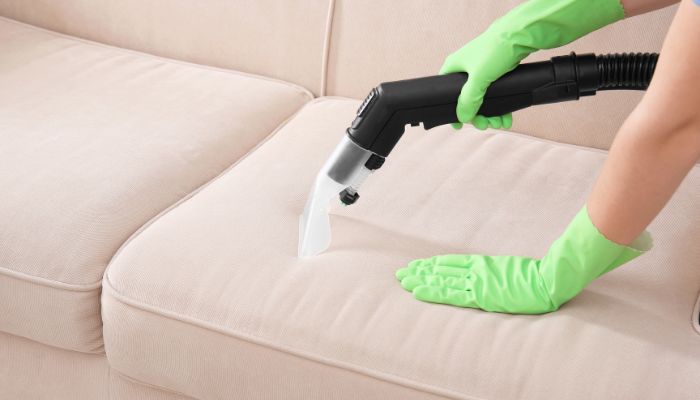


Vacuum the places dust and hair collect
Start with a weekly vacuum of the seat, back and cushions. Use slow passes and a lower suction setting if the fabric pulls or shifts. A crevice attachment reaches seams and folds where crumbs and dust collect; a brush attachment can lift loose debris and pet hair from broader areas. Check the furniture care instructions before using attachments on delicate fabric.
Where cushions are reversible, flip or rotate them every few months to spread everyday wear. A gentle shake can redistribute loose filling. Keep the vacuum nozzle moving rather than pressing it into one spot.
Respond to spills without spreading them
Lift away any loose material. Blot liquid with a clean, dry cloth, working from the outside of the spill toward its center. Do not rub it into the fabric.
Check the furniture care instructions before adding water or cleaner. Choose a product labeled for the upholstery material and follow its directions.
Test a small amount on the underside of a cushion or another hidden area. Let the test area dry, then check for color change, a ring or altered texture before treating the visible stain.
Use only the amount directed on the product label. Blot gently, and let the area dry fully before using the furniture.
A soft-bristle brush can loosen dry surface dirt on fabric that tolerates brushing. Keep the pressure light: vigorous scrubbing can disturb the weave or spread a stain.
Match the cleaning method to the fabric
Look for the manufacturer's care label or cleaning code on the furniture before choosing a cleaner. Fabric appearance alone does not tell you whether water, a solvent-based product or professional care is appropriate. Follow the furniture instructions and the cleaner label together, then perform a hidden-area test. If the test changes the color or texture, stop rather than treating the rest of the piece.
Steam is not a universal shortcut. Heat and moisture can affect some upholstery fabrics, finishes and underlying materials. Use a steam cleaner only when the furniture care instructions permit it, and test a hidden area first. Avoid saturating the cushion: moisture trapped beneath the surface can take longer to dry than the visible fabric.
Drying upholstery before use
Drying time depends on how much moisture was applied, the thickness of the cushion and the airflow around it. Humid conditions or a poorly ventilated room can slow drying. Open a window when conditions allow or use a fan to improve airflow, and keep cushions separated if they can be removed safely. Before sitting down or replacing a slipcover, check the fabric and cushion edges for lingering dampness rather than relying on a fixed number of hours.
Protecting furniture between cleanings
Deal with spills promptly, keep up the weekly vacuuming and rotate reversible cushions. For furniture exposed to frequent food, drinks or pet contact, a removable slipcover can provide an additional barrier. Choose one that fits snugly without bunching and follow its care instructions. A cover helps protect the upholstery, but spills that pass through it still need attention.
When professional cleaning makes sense
We offer professional upholstery cleaning for furniture that needs more than routine vacuuming and careful spot treatment. Consider professional help when a stain remains after a fabric-safe attempt, odor persists, or a heavily used piece has accumulated soil across the seats and arms. Stop DIY treatment if a hidden-area test shows color transfer or a change in texture; repeated applications can make the problem harder to address.
Weekly vacuuming is a starting point for home care, not a schedule for professional cleaning. The right interval for deeper cleaning depends on use, fabric, visible buildup, and whether children or pets regularly use the furniture. A lightly used chair and a family sofa may need attention at different times.
What affects cleaning work and results
The number and size of pieces, cushion construction, fabric care requirements, and the amount of soil or staining all affect the work a cleaning job may involve. Fresh spills are generally different from stains that have dried or already been treated with another product. No method removes every stain: its cause, age, earlier treatment and the fabric's colorfastness can affect the result. We would rather you avoid an incompatible DIY cleaner than risk changing the fabric before it can be assessed.
Vacuuming Regularly
Vacuuming regularly is one of the key steps to keeping your upholstery looking its best. Not only will vacuuming remove the dirt and dust that can easily build up on your furniture, but it will also help to prevent the fabric from wearing out too quickly.
I like to make sure I vacuum my upholstered furniture at least once a week. This helps to keep the dirt and dust at bay, and it also helps to loosen any particles that might have become embedded in the fabric. When vacuuming, I use the crevice attachment to get into all the nooks and crannies, and I make sure to move the vacuum in a slow and steady motion. I also take care to use a lower suction setting, so I don’t accidentally damage my furniture.
Vacuuming your upholstered furniture regularly will help to keep it looking fresh and in good condition. It’s an important part of keeping your furniture looking its best, and with just a few minutes of vacuuming each week, you’ll be sure to notice a difference in no time.
Spot Treating Stains
Spot treating stains is one of the most important steps in keeping your upholstery clean and fresh. It’s easy to ignore a stain and hope it will go away, but this can actually make the problem worse. Stains that are left untreated can set in and become much harder to remove.
To spot treat a stain, I like to start by blotting the area with a slightly damp cloth. You don’t want to scrub the stain as this can damage the fabric. Instead, press gently but firmly on the stained area, and blot away any excess moisture.
Next, you’ll want to apply a small amount of spot cleaner to the affected area. Make sure to read the instructions on the label to ensure that it’s safe for your upholstery fabric. You’ll also want to test the spot cleaner on an inconspicuous area of the fabric first, to make sure it won’t cause any damage.
Once you’ve applied the spot cleaner, use a damp cloth to gently blot the area. You may need to repeat this process a few times to get the stain to come out. If the stain is still present, you may need to use a stronger cleaner or call in a professional to help.
Spot treating stains is one of the best ways to keep your upholstery looking fresh and clean. It may take a bit of extra effort, but it’s worth it in the long run. Just make sure to be gentle, use the right cleaners, and don’t forget to test them on an inconspicuous area first. With a little bit of patience and persistence, you’ll be able to keep your upholstery looking as new as the day you bought it.
Use Appropriate Cleaners
Once you’ve identified any stains on your upholstery, the next step is to choose the right cleaner for the job. Different fabrics and materials require different cleaning products, so you’ll want to make sure you pick the one that’s best suited for your upholstery.
When it comes to cleaning upholstery, I like to use a gentle cleaner that won’t damage the material. You’ll want to check the label on the cleaner to make sure it’s safe for use on your furniture. It’s also important to avoid using any harsh chemicals, as these can discolor or damage the fabric.
In some cases, you may need to use a stronger cleaner to remove a stubborn stain. If this is the case, then you’ll want to do a spot test to ensure that it won’t cause any damage. Select a small area of the furniture and apply a small amount of the cleaner. If it’s safe to use, you’ll be able to remove the stain without any issues.
For tougher stains, you may need to enlist the help of a professional cleaner. This can help to ensure that your upholstery is properly cleaned, and that any stubborn stains are removed safely and efficiently.
Using the right cleaner is essential when it comes to keeping your upholstery looking clean and fresh. Taking the time to research and select the appropriate cleaner for your furniture can help to ensure that your upholstery looks its best and stands the test of time.
Test Cleaners In An Inconspicuous Area
Once you’ve chosen the appropriate cleaner for your upholstery, it’s important to test it out in an inconspicuous area first. This will help to make sure that the cleaner isn’t going to damage or discolor your furniture or fabrics.
The best place to test the cleaner is on the underside of a cushion or in an area that isn’t visible when the furniture is in use. This way, you’ll be able to see how the cleaner affects the upholstery without risking damage to a more visible area.
I like to use a white cloth and a small amount of cleaner to do this test. Begin by dampening the cloth with a bit of the cleaner, then gently dab it onto the test area. Wait a few minutes, then check the area to see if there is any discoloration or other damage. If the cleaner doesn’t seem to be causing any issues, then you can move on to cleaning the rest of the upholstery.
Testing cleaners in an inconspicuous area before using them on your furniture is a great way to protect and preserve your upholstery. It’s a simple step that can save you a lot of time and money in the long run. Just remember to always test your cleaners before you use them, and you’ll be sure to keep your furniture looking its best.
Clean With A Soft Brush
Now that you’ve tested the cleaners in an inconspicuous area, it’s time to start cleaning! Many people use either a damp cloth or a vacuum cleaner to remove surface dirt, but if you’re dealing with stubborn stains, then you’ll want to use a soft brush.
I like to begin by using a soft-bristle brush to brush away any loose dirt or debris. This can help to loosen any dirt that has become embedded in the fabric of your upholstery. Once the surface dirt has been removed, you can then use a damp cloth to remove any remaining dirt or stains.
When using the brush, be sure to use a gentle and circular motion. This will help to avoid any damage to your upholstery. You’ll also want to use a cleaning solution to help break down any lingering dirt or stains. Be sure to test your cleaning solution in an inconspicuous area before applying it all over the entire piece of furniture.
When cleaning, it’s important to remember that you don’t want to use too much cleaner, as this can damage the fabric. Instead, you’ll want to use just enough cleaner to break down any dirt or stains. You’ll also want to avoid scrubbing too hard, as this can cause the fabric to become distressed.
Using a soft brush is a great way to keep your upholstery clean and fresh. It can help to break up dirt and stains that have become embedded in the fabric. Just remember to be gentle and to use a cleaning solution sparingly. With these tips, you’ll be sure to have clean and beautiful upholstery that you can enjoy for years to come.
Use A Steam Cleaner
Once you’ve blotted up any spills, you may want to consider using a steam cleaner to help keep your upholstery looking fresh and clean. Steam cleaners are a great way to deep clean your furniture without any harsh chemicals or abrasive scrubbing.
When using a steam cleaner, I like to start at the top of the furniture and slowly work my way down. This will help to ensure that any germs and dirt are completely removed from the fabric. Be sure to keep the steam cleaner moving, and make sure that the steam isn’t too hot for the fabric.
If your furniture is made from natural fiber, then you may want to test the steam cleaner on a small, inconspicuous area before beginning. This will help to ensure that the steam cleaner won’t damage the fabric, and it will also help you to see how long it takes to dry.
Once you’ve finished cleaning, you’ll want to make sure that your upholstery is completely dry before you use it again. To do this, you can use a dry cloth or a fan to help speed up the drying process.
Using a steam cleaner is a great way to keep your upholstery looking fresh and clean. It’s an easy and effective way to remove dirt and germs without any harsh chemicals. Just remember to keep the steam cleaner moving, and make sure that the steam isn’t too hot for the fabric. Doing this will help to ensure that your furniture is as clean and as fresh as possible.
Vacuum The Seams And Folds
After you’re done steam cleaning your upholstery, you’ll want to make sure you don’t miss any of the hard-to-reach spots. That’s why it’s important to vacuum the seams and folds in your furniture. This will help to get rid of all the dirt and dust that can accumulate in the crevices and make your furniture look old and dingy.
I like to start by using the crevice attachment on my vacuum cleaner. You can use it to get into the crevices and corners of your upholstery, and it can help to get rid of dust and debris that a regular vacuum cleaner won’t be able to reach. Make sure you take your time and work your way around the furniture, so you don’t miss anything.
Once you’ve vacuumed the seams and folds, it’s time to move onto the rest of the furniture. Here, I like to use the brush attachment on my vacuum cleaner. This will help to get rid of any remaining dirt and dust, as well as any pet hair that may have accumulated. Be sure to take your time and use slow, steady strokes.
By taking the time to vacuum the seams and folds of your upholstery, you can help to keep it looking like new. This will help to make sure that your furniture stays looking fresh and clean for years to come. So, don’t forget to vacuum those hard-to-reach spots, and you can rest assured that your furniture will stay looking its best.
Flip Or Rotate Cushions
Once you’ve vacuumed the seams and folds of your upholstery, it’s time to flip or rotate your cushions. This is an important step in keeping your furniture looking fresh and new. It will help to prevent any unsightly wear and tear from developing in the fabric, and it can help to extend the life of your furniture.
I like to start by picking up each cushion and giving it a gentle shake. This can help to redistribute the stuffing and make it look even and smooth. You can then flip the cushion over to the other side and give it another shake. This will help to ensure that the cushions have been properly rotated and that the fabric is evenly worn.
Next, you’ll want to stand up and take a step back to get a better look at your furniture. It’s important to check that the cushions are evenly distributed and that there aren’t any lumps or bumps in the fabric. Once you’re happy with the way it looks, it’s time to enjoy your clean and fresh furniture.
Flipping or rotating your upholstery cushions is a simple task that can make a big difference in the longevity of your furniture. It will help to keep your furniture looking neat and tidy, and it can help to prevent any unsightly wear and tear from developing. So don’t forget to flip your cushions every few months and keep your upholstery looking as good as new.
Protect Upholstery With A Slipcover
If you’re looking for an extra layer of protection for your upholstery, then a slipcover might be the answer. Slipcovers are great for protecting your furniture from stains and wear and tear, and they’re also an easy way to change up your look.
I like to use slipcovers when I’m expecting company or when I want to give my furniture a refresh. Slipcovers are available for most types of furniture, and they come in a variety of colors and fabrics. You can even find machine-washable slipcovers that make it easy to clean them.
When you’re looking for a slipcover, you’ll want to make sure it fits your furniture snugly. This will help to keep it in place and prevent it from bunching up. You should also make sure the fabric is suitable for your upholstery. If you’re not sure, then you can always test it out on a hidden spot first.
When you’re putting the slipcover on, make sure you take your time and don’t rush it. This will help to ensure that it fits properly and that it looks neat and tidy. You may need to adjust the slipcover to get it just right.
Finally, be sure to check the care instructions for your slipcover before you put it on. This will help to ensure that you’re taking proper care of it and that it lasts for as long as possible.
Protecting your upholstery with a slipcover is a great way to keep it looking clean and fresh, and it’s an easy way to change up the look of your furniture. Just make sure to take your time when fitting the slipcover and to follow the care instructions. With a little bit of effort, you’ll have a slipcover that looks great and helps to keep your furniture in great shape.