
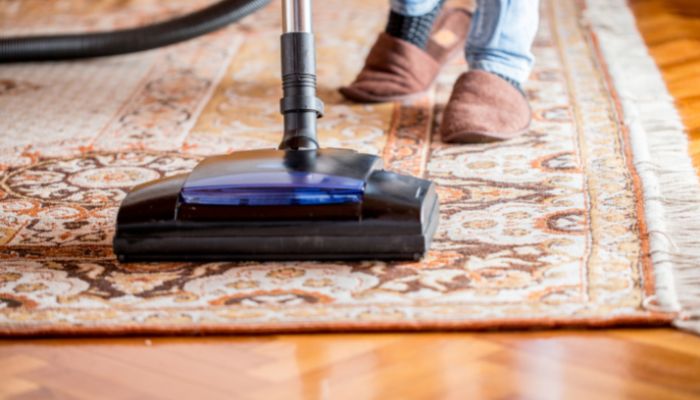


Vacuuming and rotating to control wear
We recommend starting with a weekly vacuuming routine. If pets shed on the rug or people cross it throughout the day, vacuum more often. Move slowly enough to pick up grit rather than pushing it deeper into the pile. Check the rug’s care instructions before using a rotating brush or beater bar: a tool that helps on one construction can catch loops, fringe or a delicate surface on another. Use gentle suction where the pile calls for it.
Rotate the rug every few months if one side gets more foot traffic or direct sun. In a room with more even use, a yearly rotation may be enough. Rotation spreads wear and exposure; it will not reverse fading that has already occurred. Curtains or blinds can help protect a rug beside a strongly sunlit window.
Spill cleanup and drying
Lift any solids without grinding them into the fibers. Blot liquid promptly with a clean, absorbent cloth, working from the outside of the spill toward its center.
Check the rug’s care instructions before adding water or cleaner. If the rug permits spot cleaning, test a small hidden area first. Use a small amount of mild detergent with lukewarm water only if the test does not affect the color or texture.
Blot rather than scrub, then remove cleaner residue with a lightly damp cloth if the rug permits it. Stop if color transfers to the cloth, the stain spreads or the fibers change texture.
Let the cleaned area, backing and any pad beneath it dry completely before replacing furniture or walking on the rug. Air circulation can help; avoid leaving a damp rug against the floor.
A lingering odor, stiff patch or stain that remains after careful spot cleaning is a reason to consider professional cleaning rather than repeated applications of household products.
Cleaning methods that fit the rug
Material and construction matter more than a single all-purpose recipe. Start with the rug’s care label, including any restrictions on water, heat or machine cleaning. A high-pile rug may need gentler vacuum settings than a low-pile rug. A delicate or loosely constructed rug may be damaged by aggressive brushing, while moisture can be difficult to remove from a thick rug or backing.
Do not treat steam cleaning as suitable for every area rug. Check the rug and machine instructions before using heat, moisture or a cleaning solution, and test any permitted solution in an inconspicuous spot. If the rug has unstable dye, delicate fibers or instructions against wet cleaning, choose another care method rather than risking shrinkage, color movement or a damp backing. Baking soda, vinegar and lemon juice are not automatically safe just because they are household ingredients.
Protecting the rug from movement, sunlight and furniture
A rug pad can help keep a rug from shifting and provide a layer beneath its edges. Choose one sized to sit beneath the rug rather than extending beyond it, and check that its material is suitable for your floor finish and the rug’s backing. If edges curl or the rug slips, address that movement before it becomes a trip hazard or adds wear.
Place furniture coasters beneath legs that rest on the rug, choosing coasters wide enough to support each leg. Check for sharp edges that could snag the fibers. When rearranging a room, lift furniture instead of dragging it across the pile. These steps reduce concentrated pressure and pulling, although a heavy piece left in one position can still leave an indentation.
Professional cleaning and what affects the work
We offer professional deep cleaning for area rugs. For a general maintenance schedule, consider cleaning about every two years, with a shorter interval when pets, children, heavy traffic or spills leave soil that routine care does not remove. A rug that feels stiff or crunchy may also be ready for a deeper clean. Professional cleaning addresses accumulated soil; torn edges and fraying call for repair rather than more cleaning.
When comparing cleaning options, consider the rug’s dimensions, fiber and construction, along with the amount and type of soiling. A large rug or a stain that needs careful treatment can involve different work from a small rug with ordinary surface dirt, which can affect price. A useful estimate identifies the rug being cleaned and the work proposed, so you can compare it with another option on the same basis.
Storage between seasons
Clean and fully dry the rug before putting it away. For a large rug, rolling it can avoid a hard fold; protect it with an appropriate breathable or acid-free covering and keep heavy objects off it. Choose a dry, temperature-stable place away from flooding, pests and strong sunlight. Before returning the rug to the floor, inspect it for moisture, odor or damage.
Vacuum Regularly
When it comes to proper care for your area rug, regular vacuuming is essential. Vacuuming helps to remove dirt, debris, and pet hair that can accumulate on the surface of the rug. It can also help to minimize the appearance of wear and tear that can occur over time.
I like to vacuum my area rug at least once a week. But if you have pets or a lot of foot traffic in your home, you may need to vacuum more often. To get the best results, I recommend using a vacuum cleaner with a brush attachment. This will help to loosen any stuck-on dirt, and it will also help to restore the pile of the rug.
It’s also important to keep up with spot cleaning. When spills occur, it’s best to tend to them right away. Use a damp cloth to blot away the liquid, and then use a mild detergent to clean the area. But be sure to avoid scrubbing or rubbing the spot, as this can cause damage to the fibers of the rug.
Regular vacuuming and spot cleaning can help to keep your area rug looking its best. But it’s also important to rotate your rug every few months to help even out any foot traffic wear. Finally, if your rug feels stiff or crunchy, it’s likely time for a professional cleaning. This will help to restore its softness and revive its color.
By following these tips, you can help to keep your area rug looking beautiful and extend its life. Vacuuming regularly is an important part of this process, and it’s something that you can easily add to your weekly cleaning routine.
Address Spills Immediately
It’s important to keep your area rug clean and well maintained if you want to extend its lifespan. This means that it’s important to vacuum regularly to get rid of dirt, dust, and debris. But, it’s also important to address any spills or stains that occur as quickly as possible.
If a spill happens, my first instinct is to act fast. I try to remove as much of the liquid as I can with a paper towel or cloth, and then I use a mild detergent or cleaning solution to spot clean the affected area. It’s important to never rub or scrub the stain, as this can cause the stain to spread and become more difficult to remove.
If the stain is still visible after spot cleaning, then you may need to use a professional carpet cleaning service. This is especially true if the stain is particularly stubborn, or if it’s an older stain that has been sitting for a while.
It’s also important to make sure that you allow the area to dry completely before vacuuming or walking on the rug. This will help to ensure that the stain is completely gone and that the area won’t become discolored.
If you want to keep your area rug looking its best and to extend its life, it’s important to address spills and stains immediately. A quick reaction and spot cleaning can help to keep your rug clean and looking its best for years to come.
Spot Clean And Rotate
Once you’ve addressed any spills immediately, it’s time to give your area rug some TLC. This is where spot cleaning and rotating come in. Spot cleaning is important for removing dirt and debris that can lead to long-term damage, while rotating your rug will help to prevent any discoloration or fading.
I like to start with spot cleaning. Never use harsh chemicals or scrubbing brushes, as this can damage the fibers of the rug. Instead, I use a soft brush to gently remove any dirt or dust that has built up. If you’re dealing with a stain, then use a mild detergent and some warm water. Be sure to dab the stain, rather than rubbing it, as this will help to keep the fibers intact.
Once the rug is spotless, I like to move on to rotation. This is an important step in preserving the life of your rug. Every few months, turn it around so that the front is now facing the back. This will help to even out any fading or discoloration caused by sunlight.
Spot cleaning and rotating your area rug is a great way to keep it looking and feeling its best. Not only will this help to extend the life of your rug, but it can also help to add a touch of luxury to your home. Taking a few minutes to spot clean and rotate your rug is a simple way to keep your area rug looking beautiful for years to come.
Use Appropriate Cleaning Products
Once you’ve spot cleaned and rotated your area rug, it’s time to get out the cleaning products. Choosing the right products is key when it comes to extending the life of your rug, so take the time to do your research and make sure you’re using the correct ones.
When it comes to cleaning products, I like to keep things natural and chemical-free. Natural cleaning solutions are always best, as they won’t damage the fibers of your rug and can help to keep it looking vibrant for years. Baking soda, white vinegar and lemon juice are all great natural cleaning agents that can be used to get rid of dirt and stains.
If you’re dealing with a particularly stubborn stain, then you may need to use a stronger chemical cleaner. However, before you do, it’s important to make sure it’s safe to use on your rug. Always read the label carefully, and check the cleaning instructions that come with your rug.
It’s also important to remember to use the appropriate amount of product. Too much cleaner can damage the fibers and cause discoloration, while too little can leave behind residue. The best way to determine the correct amount is to test a small area of the rug first and see how it reacts.
Using the appropriate cleaning products is an essential step in extending the life of your area rug. With a bit of research and careful attention to the instructions, you can be sure that your rug will be looking great for years to come.
Protect From Sunlight
Once you’ve selected the appropriate cleaning products for your area rug, it’s time to focus on protecting it from sunlight. Exposure to direct sunlight can cause your rug’s colors to fade and its fibers to become brittle and weak, leading to premature wear and tear.
I like to keep my area rug away from any windows or glass doors that receive strong direct sunlight. If it’s not possible to move the rug, then you’ll want to invest in some sun-blocking curtains or blinds. These can help to reduce the amount of sunlight that reaches your rug, without blocking out all natural light.
On days when you won’t be home or when the sun is particularly strong, you’ll want to consider using a rug cover to protect your rug from UV rays. They come in a variety of sizes and colors, and can provide an extra layer of protection to keep your rug looking great.
In addition to covering your rug, you’ll want to rotate it regularly. This will ensure that any areas that have been exposed to direct sunlight for an extended period of time, will have the chance to rest and receive indirect sunlight instead.
Protecting your area rug from direct sunlight is an important step in preserving its vibrancy and texture. By taking the time to keep your rug out of direct sunlight, you can help to ensure that it remains in great condition for years to come.
Use Furniture Coasters
Now that you’ve taken the necessary steps to protect your area rug from sunlight, it’s time to focus on protecting it from furniture. Furniture can cause severe damage to your rug, so using furniture coasters is an absolute must. Coasters will help to distribute the weight of the furniture across the rug evenly, preventing any indentations or premature wear and tear.
I like to place furniture coasters beneath the legs of any furniture that’s in direct contact with the rug. This includes chairs, tables, cabinets, and even couches. You’ll want to make sure that the coasters are wide enough to cover the entire surface area of the furniture leg. It’s also important to check the coasters regularly, and to replace them if they start to crack.
In addition, you’ll want to make sure you check your furniture for any sharp or jagged edges. You can do this by running your hand along the legs of the furniture. If you find any, you’ll want to take the necessary steps to sand them down. This will help to protect your rug from any unnecessary tears or snags.
Using furniture coasters to protect your area rug is a great way to extend its life. And with the right care and maintenance, you’ll be able to enjoy your rug for many years to come. So don’t forget to add furniture coasters to your rug maintenance routine and keep your area rug looking beautiful and new.
Store Carefully In Off-Seasons
Once you’ve had your area rug professionally cleaned, it’s important to store it carefully in the off-seasons. This will help to extend its life as much as possible and keep it looking beautiful for years to come.
I find that the best way to store an area rug is in an area that is climate-controlled. This will help to prevent the rug from becoming too humid or too dry, which can cause damage to the fibers. Make sure that the area is free from pests so that your rug doesn’t become infested.
You’ll also want to use an acid-free box or bag to store your area rug. This will help to protect it from dust, dirt, and other airborne particles that can dull the colors of your rug. If the rug is particularly large and bulky, you may want to roll it up and place it in a tube for storage.
When it comes to off-season storage, you’ll want to make sure that you protect your area rug from any potential damage. Avoid storing it in areas that are prone to flooding or extreme temperatures, and make sure that you don’t place anything too heavy on top of the rug.
Taking the time to store your area rug carefully in the off-seasons can help to extend its life and keep it looking beautiful for years to come. Just remember to use a climate-controlled space, an acid-free box or bag, and to avoid any potential damage. With just a few simple steps, you’ll be sure to preserve your area rug and enjoy its beauty for years to come.
Secure Rug Edges
Once you’ve safely stored your area rug during the off-season, it’s important to perform a few simple maintenance steps that will help to keep your rug looking great and extend its life. One of the most important steps is to secure the edges of your rug.
I like to start by making sure that the edges of my rug are tucked securely underneath the furniture. This helps to keep the rug’s edges from curling up and becoming damaged. If you have a rug pad, it can also provide an extra layer of protection for the edges of your rug.
You’ll also want to make sure that your rug is properly secured to the floor. This can be done with a few simple items, such as double-sided carpet tape, rug grippers, or even small furniture tabs. These will help to keep your rug from slipping and sliding, and can help to prevent any ripples or wrinkles from forming.
Finally, it’s important to inspect your rug regularly for any signs of wear or damage. If you notice any rips, tears, or fraying, then it’s time to take your rug to a professional for repair. This will help to keep your rug looking great and can extend its life significantly.
Securing the edges of your area rug is an important step in maintaining and extending its life. By taking the time to make sure that your rug is properly secured, you can prevent damage and keep it looking great for many years to come.