
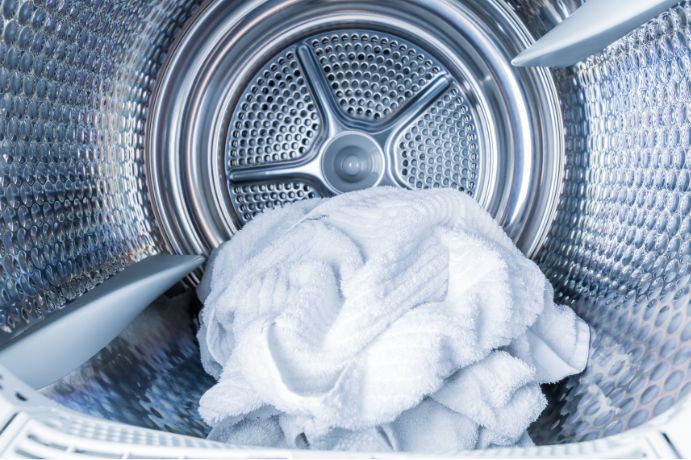


Clean the lint screen after every load
Pull out the lint screen, usually located on top of the dryer or inside its door. Remove the lint with your fingers or a soft brush, put it in the trash, and replace the screen before running another load. For a deeper clean, wash the screen with warm water and mild soap, then let it dry completely before reinserting it.
The screen catches lint at the dryer, but it does not clean the hose behind the machine or the duct leading outdoors. Keeping those parts clear takes separate checks.
Check the hose and the outdoor outlet
Turn off and unplug the dryer before inspecting the hose behind it. With enough light to see the connections, look for cracks, crushed sections, sharp bends, and visible lint. If you detach the hose to inspect its ends, protect your hands from sharp edges. A vacuum can remove reachable lint, and a vent brush can help with lint farther inside an accessible section.
Outside, check the accessible vent outlet for visible lint or debris and whether its flap can move freely. With the dryer off, remove only material you can reach without forcing a tool into the duct or taking apart an inaccessible outlet. In Katy, an outlet exposed to windblown debris or wet weather is worth checking after conditions that could obstruct it.
If you find a damaged hose, a blockage you cannot reach, or a vent route you cannot safely access, stop the DIY cleaning attempt. Clearing the lint you can see is not the same as cleaning the full vent run.
Use a vent brush without forcing it
A dryer vent brush can dislodge lint between professional cleanings. Insert it into an accessible vent opening, rotate it gently as you advance it, then collect the loosened lint with a vacuum or by hand. The maintenance schedule in our guidance is at least once every three months, with an earlier check if loads begin taking longer to dry.
A long run or several bends can limit how far a household brush reaches. Do not force a brush around a turn or leave a detached brush head in the duct. If you cannot clear the route or confirm that air can pass through it, professional cleaning is the better choice.
Keep the hose route direct and suitable for the dryer
Extra hose length and sharp bends can trap lint and restrict airflow. Measure the connection distance before changing a hose, and avoid unnecessary slack or kinks. Flexible metal hose is generally preferable to plastic or foil hose for the connection described here. Follow your dryer manufacturer’s instructions and applicable local requirements for the material, length, and installation.
If a suitable hose can be shortened without creating a strained connection, secure it with clamps and check that the dryer’s position does not crush it. A shorter hose does not fix lint already lodged farther along the vent.
Use an alarm as an alert, not a cleaning method
A dryer vent alarm monitors airflow and may alert you when a restriction affects it. Choose a device intended for your dryer setup, follow its own instructions for sensor placement and power, and test it as directed. Keep the sensor clear of dust or lint and maintain its batteries if the model uses them.
An alarm cannot remove lint or tell you that every part of the vent is clean. Treat an alert, longer drying times, or unusually hot operation as a reason to check for a restriction rather than continuing to run repeated cycles.
Plan professional cleaning around use and warning signs
Our maintenance guidance recommends professional dryer vent cleaning at least once a year, and more often for heavy dryer use. Schedule attention sooner if clothes repeatedly take longer to dry, the dryer becomes unusually hot, or an accessible hose or outlet shows damage or buildup. Stop using the dryer if you notice a burning smell, overheating, or a blockage you cannot safely clear.
The effort involved in cleaning a vent can vary with the length and bends of its route, access to the outdoor outlet, and the amount of lint present. Those are useful details when deciding whether a household brush can reach the problem or whether you need a professional visit.
Get help with dryer vent cleaning in Katy
We provide dryer vent cleaning in Katy, Texas. Between visits, keep up with lint-screen care and the accessible checks above; for a persistent restriction or your next annual cleaning, contact UpFront Home Services for a free estimate.
Why Dryer Vents Need Regular Maintenance
Clogged or dirty dryer vents can cause your dryer to work extra hard and give you worse results. More importantly, if your dryer vents have lint all over them, you could be at risk of a household fire. Lint catches fire easily, and the temperature rise from a clogged vent can easily ignite it. According to the NFPA, clothes dryers cause around 15,970 house fires annually in the US.
The leading cause is dirty or clogged dryer vents. Besides the fire risk, blocked vents can also lead to moisture problems. When the dryer cannot vent properly, it leads to moisture in your home. That will not only impact the quality of the air but also cause health issues. Regularly cleaning your dryer vents keeps your appliance running efficiently and helps protect your home and family from these potential dangers.
Schedule Regular Professional Inspections
Scheduling regular professional inspections for your dryer vent is a wise practice. Professionals thoroughly clean dryer vents because they understand the specific hazards. They remove every last bit of lint and check for potential issues with the dryer’s functionality.
You should have your vents professionally cleaned at least once a year, but you can make that more frequent if you use your dryer heavily. If you are looking for a good dryer vent cleaning service, ensure you check the certifications and reviews. It is also beneficial to choose a service that adheres to the guidelines set by the National Air Duct Cleaners Association.