
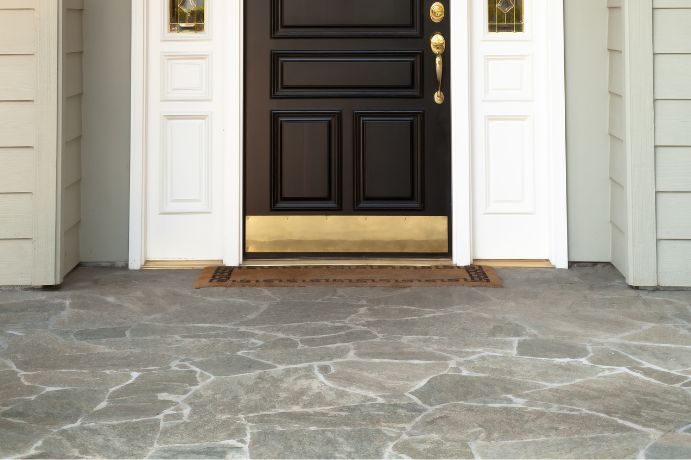


Natural stone polishing cost ranges
Professional natural stone polishing generally ranges from $3 to $8 per square foot. The stone, its condition, and the work needed to reach your preferred finish determine where a project falls within that range. For a first comparison in League City, use these estimates:
- Marble: $3 to $7 per square foot.
- Granite: $4 to $8 per square foot.
- Limestone and travertine: $3 to $6 per square foot.
- Terrazzo: $4 to $7 per square foot.
For example, 100 square feet of marble at the listed polishing rate works out to $300 to $700 before any separately priced treatment. Measuring the area gives you a starting point, not a final price for a floor or countertop.
What affects the price of floors and countertops
Stone type matters, but condition often changes the work more. Light dullness may call for polishing and buffing, with an estimated range of $3 to $5 per square foot. Deep scratches or staining may require refinishing or additional treatment, bringing the estimated work into the $5 to $8 per-square-foot range. Cracks or uneven areas can require repair before polishing, with an estimated additional $2 to $4 per square foot for that work.
A floor and a countertop made of the same stone do not necessarily cost the same to complete. A large open floor differs from a small countertop with detailed edges; access and intricate flooring patterns can also affect labor. Small projects may be subject to a $200 to $400 minimum service fee, so multiplying a small area by a square-foot rate can understate its possible cost. Larger projects may qualify for volume pricing.
For League City homes, identify entryways where tracked-in grit has dulled a floor and countertop areas where spills or cleaning products have left marks. Those details help distinguish routine wear from damage that needs more than polishing.
How we polish natural stone
- We assess the stone, its current finish, and visible wear, then clean away debris, grime, and old coatings.
- Where scratches, unevenness, or dull areas call for more preparation, we use diamond abrasives to grind or hone the surface before polishing.
- We polish and buff toward the selected finish, using stone-polishing products as appropriate.
- If sealing is needed, we address it as a separate treatment, then inspect the finish and clean up process residue.
Many polishing jobs take about 4 to 8 hours. A larger floor, detailed countertop, or surface needing honing or other additional work may take longer. The area and condition provide a better scheduling guide than the stone name alone.
What polishing can and cannot address
Polishing is for restoring sheen to a prepared surface. Honing refines the stone and can produce a smooth matte finish or prepare it for a higher shine. Light surface scratches may improve with polishing; deeper scratches and etched areas can require honing or refinishing first. Stains may need separate treatment, while cracks and uneven areas can call for repair. We base the approach on the marks present rather than treating every dull patch as the same problem.
Sealing helps protect suitable stone against moisture and staining, but it does not remove an existing stain or make stone immune to etching. If you prefer a matte appearance instead of gloss, honing may be the more relevant finish choice.
Additional treatments and their costs
- Sealing: an estimated $0.50 to $2 per square foot when needed.
- Honing: an estimated $3 to $6 per square foot for a smooth, matte finish or surface preparation.
- Repair of cracks or uneven areas: an estimated additional $2 to $4 per square foot where that work is needed before polishing.
These figures describe different scopes of work. Do not automatically add every listed rate to the polishing range: a useful estimate identifies which treatments apply, the area receiving each treatment, and whether sealing follows polishing. Marble and limestone are porous stones for which sealing may be recommended.
What to compare in a polishing estimate
To get a more useful estimate, share the stone type, whether the surface is a floor or countertop, its approximate length and width, and whether you want a matte or glossy finish. Note deep scratches, stains, etched spots, cracks, or uneven sections; photos can help show where the condition changes. We can then assess which areas need cleaning and polishing alone and which may need honing, sealing, or repair.
Compare estimates by the work included, not just the price per square foot. Look for the measured area, planned finish, preparation, any separately priced treatments, a possible small-job minimum, and the expected time on site. To discuss your League City project, call, text, or book online with UpFront Home Services.
Care after polishing
Wipe up coffee, citrus, and other spills promptly, especially on porous stone. Remove grit with regular dusting or mopping, and use mats in high-traffic floor areas to limit abrasion. Wear varies with traffic and care, so the appearance of dull patches is a more useful signal for a touch-up than a fixed calendar date.
What Are The Benefits of Professional Natural Stone Polishing?
1. Restores Natural Beauty
Professional polishing removes dullness, stains, and scratches, making your stone look brand new.
2. Increases Durability
Regular polishing prevents long-term damage and maintains the stone’s strength.
3. Enhances Property Value
A well-maintained floor or countertop boosts your home’s aesthetic appeal and resale value.
4. Prevents Staining & Etching
Sealing after polishing ensures your stone remains stain-resistant and easier to maintain.
5. Saves Time & Effort
DIY stone polishing can be time-consuming and risky. Experienced professionals ensure the job is done correctly and efficiently.
How to Maintain Your Natural Stone After Polishing?
Once your natural stone has been professionally polished, proper maintenance can help keep it looking pristine for years to come. Here are some key tips:
- Wipe up spills immediately: Liquids like coffee and citrus can cause staining, so it’s crucial to wipe any spills immediately to prevent their permanence.
- Use mats or rugs: Placing mats in high-traffic areas can reduce wear and tear of your precious marble floors.
- Regular dusting and mopping: Removing dust and debris prevents micro-scratches and keeps the surface shining.
- Schedule professional maintenance: A periodic professional touch-up ensures long-term durability and aesthetics.