


What the damaged fibers tell you
Start by looking closely at the burn. If the carpet has a surface mark but the fibers still have their original shape, gentle cleaning may improve its appearance. Test a carpet-safe cleaner on an inconspicuous spot first, and avoid scrubbing hard enough to pull out the pile. Cleaning will not replace fibers that are missing, fused together or melted into a hard patch.
A burn hole, an iron-shaped melt mark or a patch of permanently damaged fibers is usually a better candidate for a carpet patch. You cut out the damaged section and fit a matching piece in its place. Before making that cut, check how far the damage extends and whether the backing underneath is sound and dry.
Finding carpet for the patch
Look for leftover carpet in your attic before taking carpet from anywhere else. A small closet can also provide a donor piece. Compare color, texture and pile height in the room's lighting. Carpet from the same installation is often a closer match than a new piece, although wear and sun exposure can still make a patch visible.
Check which way the pile lies by brushing it with your hand. Mark that direction on the back of the donor piece so it runs the same way as the surrounding carpet. If you plan to use closet carpet, account for the opening it will leave there before cutting it out.
How a carpet patch fits
For a small burn hole or a larger damaged patch, measure the full area that needs removal, not just its darkest center. A careful DIY sequence is:
- Mark a cut line around the damaged fibers. Keep the cut as small as you can while removing the full damaged area.
- Use a straightedge and a sharp carpet knife to cut out the damaged section. Cut deliberately so you do not damage the floor beneath it.
- Transfer the opening's size and shape to the donor carpet. Keep the marked pile direction aligned with the surrounding carpet.
- Cut the donor piece and test its fit before securing it. Trim a tight edge gradually rather than leaving a gap around the patch.
- Secure the patch to the carpet backing using a method suited to the carpet and backing, then settle the pile along the cut edges without pulling out fibers.
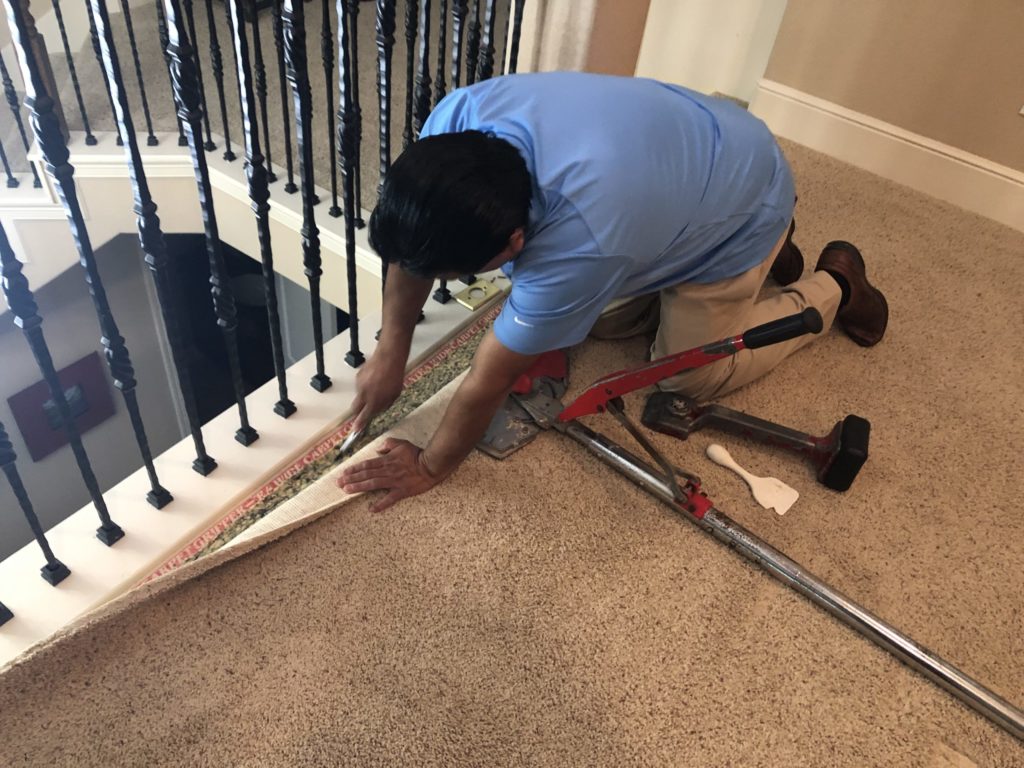
We recommend a Kool Glide for completing a patch at the backing. It is a carpet bonding tool, not a way to restore burned fibers. A DIY carpet burn repair kit or seam tape may offer another way to secure a piece, but the appropriate material depends on the carpet, backing and product instructions. Keep sharp blades and any heat-based tool away from your hands and surrounding fibers.
What affects cost and appearance
The size of the damaged area determines how much carpet must be removed and replaced. A matching donor piece, its pile direction, the carpet's texture and the condition of the backing all affect how well the repair blends. A patch across a visible traffic area may stand out more than one near a wall, particularly if the surrounding carpet has faded or flattened with use.
These same details affect the work involved and, in turn, the repair estimate. In Houston and Katy, check that the carpet and backing are dry before patching an area affected by a leak or persistent moisture. Covering damp material with a patch does not address the moisture beneath it.
When professional repair makes sense
Consider professional help when the burn covers more than a small spot, the backing is damaged, you do not have a close donor match, or a poorly aligned seam would be conspicuous. If you rent, get the property owner or manager's approval before cutting the installed carpet or removing a piece from a closet. Share the proposed donor location as well as the damaged location so both changes can be considered.
Carpet repair estimates in Houston and Katy
We offer carpet repair service in Houston and Katy, TX, and a free estimate. When you contact UpFront Home Services, a photo of the burn, its approximate dimensions, a wider photo showing its position in the room, and a photo of any available donor carpet can help show what you need repaired. Include whether the fibers are scorched, melted or missing, and whether the backing has been wet.