
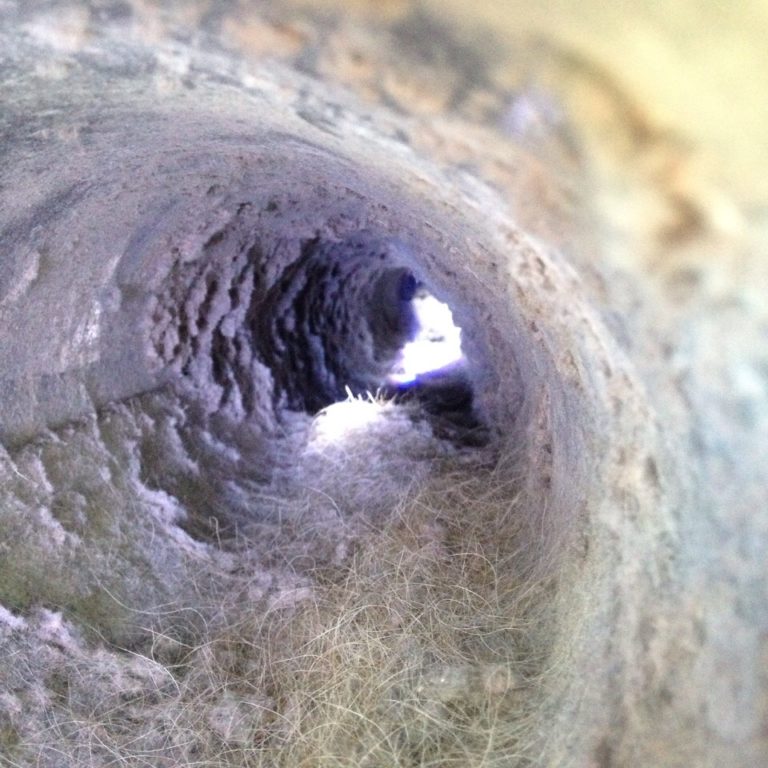


What collects inside a dryer vent
Your lint screen catches some fibers, but lint can also collect in the duct behind the dryer and along the route to the outdoor outlet. The vent carries warm, moist air outdoors, so an opening that becomes blocked can leave lint in the duct instead of letting it exit. At the outside outlet, check for lint around the opening and for a flap that does not move freely. Leaves, other debris or a nest can also obstruct an exterior opening.
Signs that airflow needs attention
Clothes taking longer than usual to dry, unusually hot laundry or a noticeably weaker flow of air at an accessible outdoor outlet can point to a restriction. Check the lint screen first. If the symptoms continue, the obstruction may be farther along the vent. Reduced airflow can extend drying times and allow more lint to accumulate, which is a fire concern. If you notice a burning smell, stop using the dryer until the cause has been addressed.
What dryer vent cleaning should address
Think of the vent as a route, not just the opening you can see. It begins at the dryer connection, continues through the duct and ends outside. Clearing visible lint at the outlet alone may leave buildup farther inside. When deciding how to handle a restriction, identify where the vent exits and whether the route or dryer connection can be reached without moving the appliance unsafely. A roof outlet presents a different access problem from a low wall outlet.
We offer dryer vent cleaning. If you are choosing between a DIY kit and service, consider whether you can reach the full duct run and check that air can exit afterward. A brush that reaches only the first section does not establish that the rest of the route is clear.
What changes the work involved
A short, accessible run to a wall outlet is different from a longer route with several bends or a roof outlet. Bends can make a brush harder to guide; an inaccessible outlet or an object lodged in the duct can change the work needed. These differences can also affect cost. Before choosing an approach, note where the vent exits and whether the problem is routine lint buildup, weak airflow or a known obstruction. Those details help define the work rather than relying on a price for an unlike vent layout.
When a booster fan may be worth considering
If your dryer vents through the roof, a booster fan is one option to consider for a route with airflow difficulties. It is not a substitute for removing lint or a blockage. Fan suitability depends on the vent design and the dryer manufacturer’s instructions, and a fan adds a component that needs access for maintenance. Start by addressing a restricted vent before treating a fan as the solution.
Plan cleaning around your dryer and vent
Consider dryer vent cleaning every one to two years. Shorten that interval if drying times increase or airflow at the outlet weakens, and follow any more specific guidance for your dryer. Clean the lint screen as directed by its manufacturer, and do not leave home while clothes are in the dryer. To schedule dryer vent cleaning with us, call or text (832) 303-3546.