
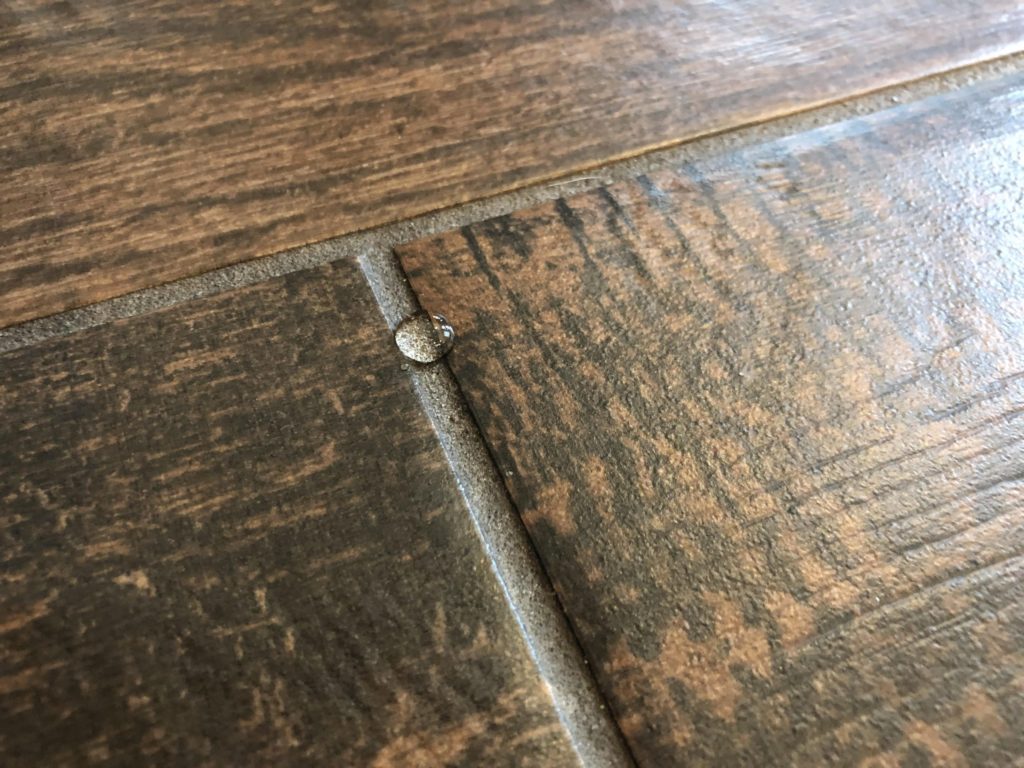


We match grout sealer to stains and traffic
For tile and grout, the useful choice is between the kind of staining you expect and the condition of the grout after cleaning. We use three options: water-based sealer, solvent-based impregnator sealer and color sealer.
- Water-based sealer: A choice for basic traffic-lane wear in living rooms, bathrooms, walkways and kitchens with less oil exposure. Our water-based option does not repel oil-based stains, so grout in front of a stove needs particular care. Its stated life expectancy is 1 to 3 years, depending on traffic, use and maintenance.
- Solvent-based impregnator: Our choice for stronger resistance to oil-based kitchen stains. It costs more than water-based sealer, making it worth considering for the stove area even if you choose water-based sealer elsewhere. Its stated life expectancy is 3 to 5 years, depending on traffic, use and maintenance.
- Color sealer: An option when grout still will not come clean. It helps resist permanent staining, but soil can still collect on it and must be removed. We recommend annual cleaning and touch-ups as needed.
Cleaning comes before the sealer decision
Start with tile and grout cleaning from UpFront Home Services, then judge what remains. If grout cleans up but sees ordinary foot traffic, water-based sealer may fit. If cooking oil reaches grout near the stove, solvent-based impregnator offers the oil-stain protection our water-based option lacks. If discoloration remains after cleaning, color sealing may be the better choice than expecting a clear sealer to hide it.
You can also divide the work by exposure rather than selecting one sealer for every room. Using solvent-based sealer in the kitchen and water-based sealer in other areas is a way to limit the higher-cost option to where oil protection matters most. A cooking mat in front of the stove helps reduce spills reaching the grout with either choice.
What affects cost and long-term results
The sealer type and the area receiving it drive the choice: solvent-based impregnator is more expensive than water-based sealer, while color sealing brings ongoing cleaning and possible touch-ups. Traffic lanes, cooking spills and maintenance also affect how long protection remains useful. The stated 1-to-3-year and 3-to-5-year ranges are expectations, not dates when every floor will need resealing.
We offer a lifetime guarantee on our color seal. Maintaining color-sealed grout involves having us clean it annually and perform touch-ups as needed. Color seal has a stated life expectancy of the lifetime of the floor, but it still needs that care.
Sealing helps with stains, not everyday dirt
A sealer is intended to make staining less likely, not to stop a floor from getting dirty. Oil, food and soil can still sit on grout or a color-sealed surface. Clean spills rather than leaving them in place, and rinse dirt and soil from color-sealed grout as part of regular upkeep. If an area becomes harder to clean over time, consider its traffic, use and cleaning history before choosing another treatment.
The tile or stone changes the decision
Natural stone makes the higher cost of solvent-based impregnator particularly worth considering. With ceramic tile, focus on the grout joints and their exposure to oil, water and foot traffic rather than assuming the tile and grout need the same treatment. The material being sealed matters: a product selected for grout should also be appropriate for any tile or stone it may contact.
Sealer terms depend on the surface
An impregnating sealer penetrates a porous material; a topical sealer forms a surface layer. Water-based and solvent-based describe what carries a sealer's ingredients, not by themselves whether the product penetrates or forms a film. Our solvent-based grout option is an impregnator, so descriptions of solvent-based concrete coatings do not describe that grout treatment.
Concrete driveways and outdoor paving face different conditions from indoor tile grout, including rain and exposure across a large surface. Dental or endodontic sealers serve an entirely different purpose. Choose by surface and use, not by the word “sealer” alone.