
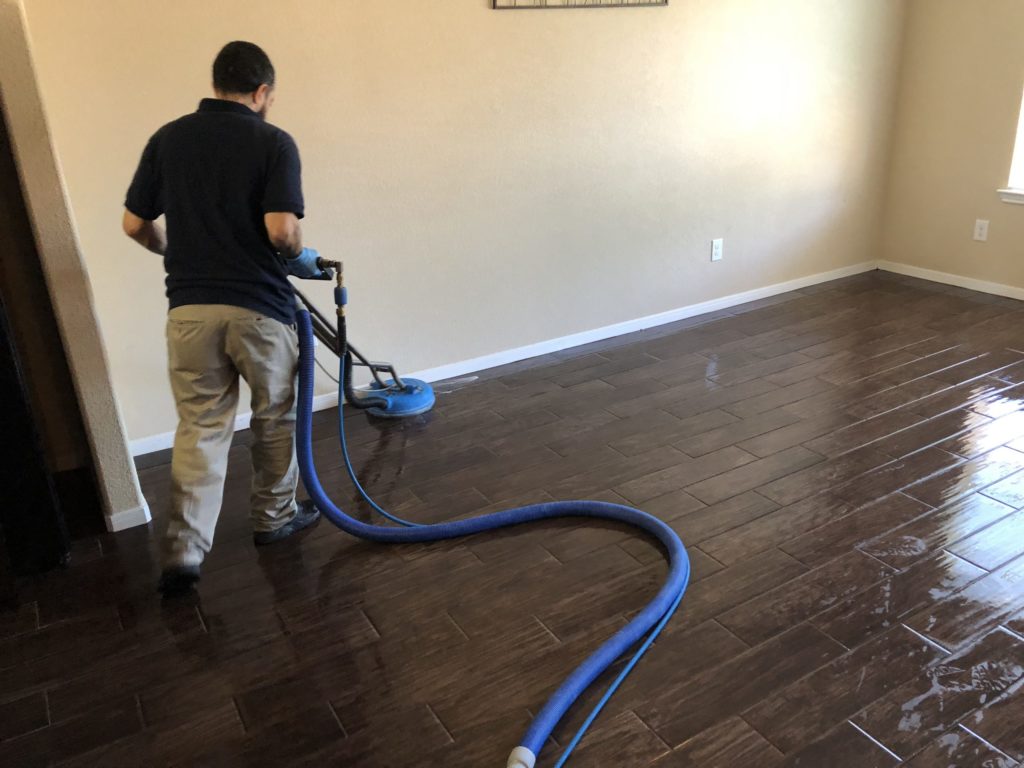


What our tile and grout cleaning includes
We use a multi-step process rather than treating every floor as a single rinse. It includes pretreatment, an alkaline rinse, an acid rinse and a water-based grout sealer applied at no charge. The rinses address different kinds of buildup, while sealing helps protect the cleaned grout from some everyday spills and staining. When you compare services, check which of those steps the quoted work includes.
How the alkaline and acid rinses differ
Our alkaline rinse uses a blend of oxidizers to help remove residues, grease and other soil. The acid rinse works differently: it etches away a microscopic layer of grout and helps neutralize the alkalinity left by the preceding rinse. Because acid acts on the surface, tile material and grout condition matter. Acid-sensitive natural stone, including marble and limestone, can be etched by acidic products; a method suitable for ceramic tile should not automatically be used on stone. Acid rinsing is not a substitute for repairing loose or damaged grout.
What affects the result
Grease near a cooking area, tracked-in grit on an entry floor and soap residue in a shower create different cleaning challenges. A dark grout line may also reflect staining or wear rather than removable surface soil. We use truck-mounted units powered by our vans’ engines, with heat and suction to clean and recover soil. Our technicians complete a three-month, hands-on training period with a Master Technician, and we clean tile and grout daily. Those steps support a consistent process, but cleaning should not be confused with restoring damaged grout or tile.
What affects cost and how to compare quotes
A useful comparison starts with the work involved: the amount of tile and grout, the extent of buildup, access around fixtures or furniture, and whether different surfaces need different treatment. Then compare what each quote includes, particularly pretreatment, the rinses, grout sealing and follow-up for a problem area. A lower price for fewer steps is not the same scope of work. We include our water-based grout sealer at no charge, so account for that when comparing totals.
How to care for tile between deep cleans
On ceramic tile floors, remove loose grit before damp cleaning so it does not scrape across the surface. For routine grout care, plain water and a soft cloth or brush are a simple starting point; use a cleaner compatible with your tile and grout when water is not enough. Avoid assuming that vinegar or lemon juice is a safe natural option: acids can etch some stone and affect grout. Online videos and forum tips can show a technique, but first match any product or tool to your actual tile, grout and finish.
In a shower, rinse away soap residue and dry accessible surfaces after use. Ventilation helps moisture clear, particularly in a humid bathroom where surfaces stay damp. On a floor with embedded grime, dwell time according to a compatible cleaner’s directions may reduce scrubbing, but wiping alone may not lift soil deep in grout lines. Steam is another option only where the tile, grout and manufacturer’s care guidance allow it; avoid directing steam at loose grout. For a deeper floor clean, addressing buildup in the grout lines matters as much as wiping the tile faces.
How our re-clean guarantee works
Our free return visit covers cleaning services only. If an area we cleaned needs attention, please reach out as soon as possible, within seven days after service. We’ll return at no charge to address it. A photo of the area helps us see what needs attention before we return. Re-cleaning gives that spot another cleaning pass; it does not turn permanent staining, worn grout or damaged tile into a cleaning result.