
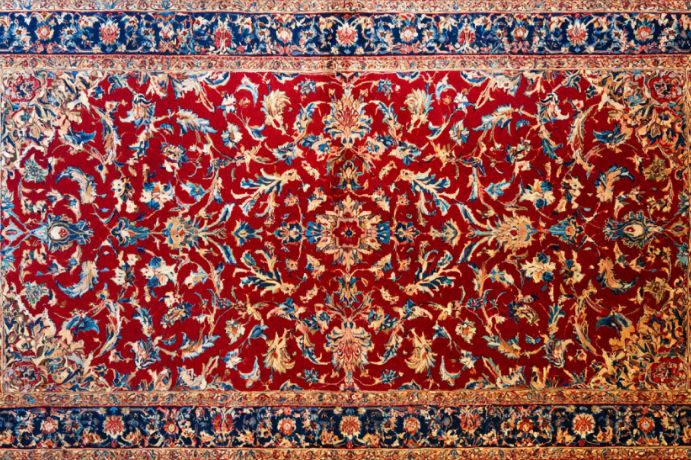


What we consider before cleaning a rug
Two rugs with similar patterns may need different care. A hand-knotted wool rug has a foundation that can hold grit and moisture below the pile. A hand-tufted rug may have adhesive and backing materials that respond differently to water. Silk, viscose and rayon can be particularly sensitive to friction or changes in moisture. We consider the visible fibers, construction, fringe, backing, existing wear and any previous treatment before choosing a cleaning approach.
Dyes matter as much as fibers. Where color stability is a concern, testing an inconspicuous area can help guide the choice of moisture and cleaning solution. Testing reduces uncertainty, but it cannot reverse dye bleeding that happened before cleaning or make fragile materials immune to damage.
How professional rug care works
Inspect the rug’s pile, foundation, backing and fringe, noting stains, worn areas, previous repairs and signs of dye movement.
Remove loose, dry soil before introducing moisture. Sand and grit can sit beneath the visible pile and become muddy residue if they are wetted first.
Choose cleaning and spot treatment according to the rug’s fibers, dyes, construction and condition. A wool rug and a viscose rug should not be treated as interchangeable with synthetic wall-to-wall carpet.
Manage moisture and drying so the pile and underlying materials dry appropriately before the rug returns to use.
Some rugs benefit from the access and controlled drying available in a dedicated cleaning facility; others may be suitable for treatment at home. The decision depends on what must be cleaned beneath the surface, how the backing responds to moisture and whether the rug can dry thoroughly. In Houston, Katy and surrounding areas, humidity can slow drying, making that final stage especially important.
Signs that your rug needs more than routine vacuuming
Vacuuming removes loose surface soil, but it may leave sand, pet hair and other debris deep in a dense pile. Consider professional attention if traffic lanes remain dull after vacuuming, the rug feels gritty, a spill has reached the backing, or an odor persists. A rug in an entryway or dining area generally encounters more soil and spills than one in a low-use room, so its condition is more useful than a calendar alone.
Rotate a rug when its placement allows to distribute foot traffic and sunlight exposure. Rotation can reduce uneven use, but cleaning will not restore color that sunlight has permanently faded.
What to do after spills and pet accidents
Blot a fresh spill promptly with a clean, absorbent cloth. Do not scrub, apply several stain removers in succession or soak the spot. Liquid can pass through the pile into a cotton foundation, backing, pad or floor, even when the surface mark looks small. Check underneath the rug and allow affected flooring to dry before covering it again.
Pet urine may reach layers that a surface spray cannot clean. Residue left in a rug or pad can continue to smell, sometimes more noticeably in humid weather. The depth of contamination, the rug’s materials and any previous treatments affect what cleaning may improve. Tell us where accidents occurred and which products have already been used so those conditions can be considered.
What affects cost and results
The scope of rug care depends on size, fiber and construction, soil level, stains, odor contamination and the condition of the backing and fringe. A rug with loose dry soil presents a different task from one with urine that has reached its foundation and pad. Delicate dyes or weakened fibers may also limit which cleaning methods are appropriate. These differences are more useful for comparing estimates than rug size alone.
Cleaning can remove soil and may improve some spots and odors. It cannot replace worn pile, restore permanently faded dye or repair a torn structural fringe. An older rug with previous repairs or a fragile foundation may need a more cautious approach even if it has few visible stains.
How to choose a rug-cleaning approach
Before choosing a provider, look for a clear explanation of how the rug’s fibers and construction will be assessed, whether dye testing is appropriate, how embedded dry soil will be addressed and how the rug will be dried. Find out whether the proposed work takes place at home or in a facility and whether a separate concern, such as deep pet contamination or damaged fringe, changes the work. A useful explanation distinguishes likely cleaning improvements from damage that cleaning cannot correct.
What to share before cleaning
Contact us about your rug in Houston, Katy or a surrounding area. Share its approximate dimensions and known materials, along with any spills, pet accidents, water exposure, previous spot products or repairs. Note loose fringe, a deteriorating backing or an area that has changed color. You do not need to identify the rug’s origin to describe what has happened to it.
Fiber Identification Is an Important First Step
Before a specialty rug is cleaned, the fiber content should be evaluated whenever possible. Wool, silk, cotton, viscose, synthetic fibers, and blends do not react identically to moisture or cleaning chemistry.
Professional cleaners consider the texture, construction, labeling, backing, and other characteristics of the rug before choosing a process. Identifying the material first helps reduce the risk of using a cleaning method that is too aggressive for the fibers.
Wool Rugs Need Appropriate Cleaning Chemistry
Wool is one of the most common materials found in high-quality rugs. It is durable and naturally resilient, but it still requires appropriate care. Strong cleaning chemicals, excessive heat, or aggressive agitation can affect the fibers and appearance.
Wool can also hold a significant amount of moisture, making controlled rinsing and drying important. Professional rug cleaners use methods intended to remove soil while respecting the characteristics of the wool rather than treating it like synthetic residential carpet.
Silk Rugs Can Be Especially Delicate
Silk can create extremely detailed patterns and a distinctive sheen, but it is more delicate than many common carpet fibers. Moisture, friction, and improper chemistry can alter the appearance or texture of silk.
A silk or silk-blend rug should be evaluated carefully before cleaning. Testing and controlled methods become especially important because damage to delicate fibers or dyes may not be reversible once it occurs.
Dye Stability Is One of the Biggest Concerns
Many Oriental rugs contain several colors positioned directly next to one another. If those dyes are not stable during cleaning, color can migrate from one area into another, creating bleeding or permanent discoloration.
This risk is one reason professional cleaners may test dyes before introducing significant moisture or cleaning solution. A brightly colored rug may look completely stable while dry but react very differently once exposed to water.
Professional Dye Testing Helps Reduce Risk
Dye testing is used to evaluate how colors respond to a proposed cleaning method. The cleaner may test an inconspicuous section before treating the entire rug.
Testing does not guarantee that every dye issue can be prevented, but it provides important information before cleaning begins. If a color appears unstable, the process can be adjusted to reduce moisture, change chemistry, or use another method.
Hand-Knotted Rugs Have Complex Construction
Hand-knotted rugs are built by tying individual knots around foundation threads. This construction creates durability and detail, but it also means the rug contains multiple layers that can hold soil and moisture.
Cleaning needs to address dirt that has settled beyond the visible tips of the pile while also protecting the foundation. Excessive agitation or inappropriate handling can place unnecessary stress on knots and structural fibers.
Hand-Tufted Rugs Require Different Considerations
Hand-tufted rugs are constructed differently from hand-knotted rugs. In many cases, fibers are inserted through a backing and secured with adhesive or latex before another backing material is applied.
As these rugs age, backing materials can deteriorate or develop odors. Excessive moisture may also affect adhesives and internal components. Professional inspection helps identify this construction before cleaning begins.
Machine-Made Specialty Rugs Can Still Need Professional Care
A rug does not have to be handmade or antique to require careful cleaning. Machine-made rugs can contain delicate fibers, specialty dyes, intricate patterns, or backing materials that react poorly to improper cleaning.
The appropriate process should be based on material and construction rather than price or manufacturing method alone. Even a newer rug can be damaged if it is saturated, scrubbed aggressively, or treated with the wrong chemicals.
Fringe Requires Special Attention
Decorative fringe is often one of the first parts of a rug to show soil because it extends beyond the protected body of the rug. It can collect dust, darken from foot traffic, and become tangled during routine use.
Fringe may also be part of the rug’s structural foundation rather than a decorative piece sewn on afterward. Aggressive brushing, bleaching, or scrubbing can weaken fibers or create an uneven appearance. Professional cleaners can treat fringe separately when necessary.
High-Traffic Rugs Need More Frequent Attention
Rugs in entryways, living rooms, hallways, and dining areas receive substantially more use than rugs placed in decorative or low-traffic spaces. Repeated foot traffic pushes soil deeper while also flattening fibers.
These rugs may need more frequent vacuuming, rotation, and professional cleaning. Waiting until the entire piece looks heavily soiled can allow traffic lanes to become more pronounced and embedded soil to remain for longer periods.
Rug Rotation Can Help Distribute Wear
Sunlight and foot traffic rarely affect a rug evenly. One side may sit near a window while another receives constant traffic from a hallway or doorway.
Rotating the rug periodically, when appropriate for the space and construction, can help distribute use more evenly. This does not eliminate wear, but it can prevent one small section from receiving nearly all of the traffic and sunlight exposure.
Stains Need to Be Treated Based on Both the Spill and the Rug
A stain treatment has to account for two things: what caused the stain and what the rug is made from. Coffee, wine, grease, pet urine, food, and other substances all behave differently, while wool, silk, cotton, and synthetic fibers respond differently to cleaning products.
A stain remover that works on synthetic carpet may be too aggressive for a wool or silk rug. Professional spot treatment balances stain removal with protecting the fiber and dye system.
DIY Stain Removers Can Create Permanent Damage
When a stain appears on an expensive rug, it can be tempting to use whatever carpet cleaner is already under the sink. Unfortunately, household spot products can contain ingredients that affect color, texture, or pH-sensitive fibers.
Using several products in succession can make the situation even more complicated. If a stain does not respond to a simple, appropriate first-aid method, professional treatment is safer than experimenting with stronger chemistry.
Scrubbing Can Distort Rug Fibers
Aggressive scrubbing can damage pile direction, create fuzzy areas, distort texture, or spread contamination into a larger section. Delicate rugs are especially vulnerable to this type of damage.
Professional cleaners use controlled agitation based on the rug’s construction and condition. The objective is to loosen soil without physically altering the appearance of the fibers.
Area Rugs Can Hold Odors Without Looking Dirty
Rugs absorb more than visible dirt. Body oils, pet residue, food particles, smoke, spills, and other contaminants can contribute to odor even when the pattern hides obvious soiling.
If a room continues smelling stale after routine vacuuming and household cleaning, the rug may be one source worth evaluating. Professional cleaning can help when the odor is associated with removable contamination in the textile.
Water Damage Requires Special Attention
A specialty rug exposed to a plumbing leak, stormwater, appliance failure, or other water event should be addressed quickly. Water can affect dyes, fibers, backing materials, and the floor underneath.
The source and type of water also matter because contamination levels can vary significantly. A wet rug should not simply be rolled up and left in place, as trapped moisture can create additional problems.
Improper Drying Can Damage a Rug
Cleaning is only part of professional rug care. Proper drying is equally important. A rug that remains wet for too long may develop odors, dye migration, browning, dimensional changes, or other moisture-related issues.
The rug should be dried in a controlled manner appropriate for its fibers and construction. Houston’s humidity makes this particularly important because natural drying can be slower when the surrounding air already contains substantial moisture.
Do Not Lay a Wet Rug Back on the Floor
A rug should be fully dry before being returned to its normal location. Placing a damp rug on wood, laminate, or another moisture-sensitive surface can trap moisture underneath and potentially affect both the rug and flooring.
Professional cleaners can provide guidance about drying and when the rug is ready to be placed back into use.
Machine Washing Can Ruin Some Specialty Rugs
Small rugs sometimes look like they could simply be placed in a washing machine, but specialty rugs may shrink, distort, bleed dye, or suffer backing damage during machine washing.
A rug’s size does not determine whether it is machine washable. Always follow manufacturer instructions, and when those instructions are unknown, professional evaluation is safer than guessing.
Steam Cleaning Is Not Right for Every Rug
The phrase “steam cleaning” is often used broadly to describe hot water extraction, but not every rug should be cleaned using the same equipment or level of moisture.
Some rugs can be safely cleaned using controlled water-based methods, while others require specialized low-moisture or alternative processes. Fiber type, dye stability, construction, and condition determine the safest approach.
The Floor Under the Rug Needs Cleaning
Dust and grit can work their way through a rug and settle on the flooring underneath. When the rug is removed for professional cleaning, take the opportunity to clean the exposed hard floor using a method appropriate for that material.
Allow the floor to dry completely before the rug and pad are returned. This prevents moisture from becoming trapped underneath the textile.
Fringe Bleaching Can Cause Damage
Homeowners sometimes try to brighten dirty fringe using strong bleach or whitening products. This can weaken natural fibers, create an unnaturally bright appearance, or cause permanent damage.
Fringe should be cleaned with methods appropriate for its fiber content and condition. Older fringe may already be fragile and require a particularly gentle approach.
Previous Repairs Can Affect Cleaning
Specialty rugs are sometimes repaired with replacement fringe, patches, reweaving, adhesives, or other materials. These repair materials may react differently to moisture or cleaning chemistry than the original construction.
If you know a rug has been repaired, tell the cleaner before service. The repaired areas can then be inspected and treated with additional caution when necessary.
Old Cleaning Residue Can Remain in the Rug
A rug that has been cleaned repeatedly with household products may contain detergent or spotting residue. These materials can attract soil or react unexpectedly during the next cleaning.
Professional rinsing may help remove previous residue when it is safe for the rug, but the cleaning method still needs to account for fiber type and dye stability.
Cleaning Should Be Adjusted to the Rug
Once the rug has been evaluated and dry soil has been removed, the cleaning process can be selected based on its characteristics. Some rugs tolerate thorough washing and rinsing, while others require tightly controlled moisture or different chemistry.
This customized approach is what separates professional specialty rug care from simply applying carpet cleaner to every textile in the home.
Stain Treatment May Be Done Separately
Specific stains can require additional treatment before, during, or after the main cleaning process. Pet stains, food, grease, beverages, ink, and other contaminants may respond differently.
No responsible cleaner can guarantee that every stain will disappear completely. Results depend on what caused the discoloration, the fiber, the dye, how long the stain has been present, and previous cleaning attempts.
Busy Homes May Need More Frequent Rug Care
Children and pets increase the amount of soil reaching a rug. Crumbs, muddy paws, pet hair, dander, spills, and everyday foot traffic can build up much faster in a family room than in a lightly used space.
Regular maintenance between professional cleanings helps slow this process. Vacuum appropriately, rotate the rug when suitable, respond to spills quickly, and keep entry areas clean to reduce tracked-in soil.
Use the Right Vacuum Settings
Vacuuming is important, but aggressive brush settings can damage fringe or delicate fibers. Avoid running rotating brush rolls directly over fringe, and follow care recommendations appropriate for the rug.
For particularly delicate antique, silk, or specialty rugs, professional guidance may be helpful in determining the safest household vacuuming method.
Deal With Spills Quickly but Carefully
When a spill happens, blot excess liquid using a clean absorbent towel instead of scrubbing. Work carefully so you do not spread the contamination or distort the pile.
Avoid soaking the rug or applying unfamiliar stain removers. If the rug is valuable, delicate, or contains unstable dyes, professional advice should be sought before attempting more aggressive spot treatment.
Professional Rug Care Helps Protect Your Investment
Oriental and specialty rugs can represent a significant financial or sentimental investment. Some are handmade pieces that may remain in a family for generations, while others simply have colors, patterns, or craftsmanship that homeowners want to preserve.
Professional cleaning focuses on more than improving appearance. It considers the fibers, dyes, construction, and condition of the piece so soil can be removed using methods designed to reduce unnecessary risk.
When Should You Call a Professional Rug Cleaner?
Professional service is worth considering when regular vacuuming no longer improves the rug’s appearance, traffic areas have become noticeably darker, odors persist, stains remain, or pet contamination has occurred. Delicate, antique, wool, silk, viscose, handmade, and other specialty rugs should receive particularly careful consideration before any DIY cleaning.
You should also seek professional help after significant water exposure or when dyes begin transferring during an attempted spot treatment. Acting early can prevent a small problem from becoming more difficult to correct.